

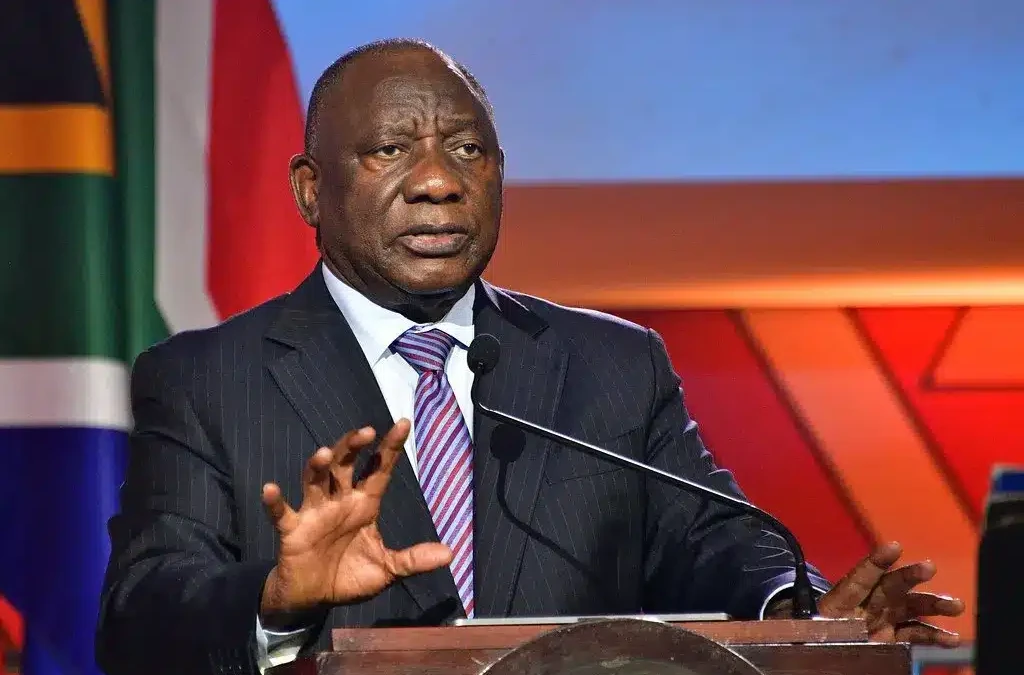
President Cyril Ramaphosa addressed the nation from the Union Buildings in Pretoria on Sunday evening 7 June 2026 on the government’s approach to illegal migration and the surge in anti-immigrant protests across South Africa. Image: Supplied/The Presidency
President Cyril Ramaphosa addressed the nation on Sunday evening 7 June 2026 from the Union Buildings in Pretoria. The Ramaphosa immigration address outlined the government’s approach to illegal migration amid rising anti-immigrant tensions across South Africa. Furthermore, the president announced a series of concrete measures including tighter border controls, dedicated immigration courts and stricter employer prosecutions. As a result, the address has been welcomed by some and criticised by others as too little too late.
Ramaphosa Immigration Address: The Key Announcements
Ramaphosa made several significant policy announcements during the address. He confirmed that the government will set up dedicated courts to deal specifically with immigration matters. These courts will speed up the deportation of undocumented migrants. Furthermore, the president said the Border Management Authority intercepted more than 450,000 people attempting to enter South Africa illegally in the past year alone. As a result, he said the border enforcement infrastructure is already delivering results and will be strengthened further.
Ramaphosa also addressed the issue of employers who hire undocumented workers. He said the government will crack down on businesses that exploit undocumented foreign nationals. “We cannot have a situation where employers who, after being charged and found guilty of violating our laws, merely pay a fine and continue employing undocumented foreign nationals whom they exploit,” he said. Therefore, repeat offenders will face significantly harsher consequences under the new framework.
The president also confirmed that refugee reception centres will be relocated to border posts in a phased process. The Tshwane centre will be the first to move this year. Furthermore, the deportation billing policy announced earlier by Home Affairs Deputy Minister Njabulo Nzuza was confirmed. South Africa will send the cost of deportations to the embassies of countries whose nationals are removed.
The Context Behind the Address
Ramaphosa’s address came amid some of the most intense anti-immigrant tensions South Africa has experienced in years. Anti-illegal immigration protests swept through Gauteng, KwaZulu-Natal and the Western Cape in recent weeks. Violent unrest broke out in Mossel Bay and surrounding areas. Furthermore, anti-immigrant movement March and March set a hard deadline of 30 June 2026 for undocumented foreign nationals to leave the country. The movement threatened a nationwide shutdown if that deadline was not met.
Several African countries including Ghana, Mozambique, Malawi, Zimbabwe, Lesotho and Kenya urged their citizens in South Africa to exercise caution in the weeks leading up to the address. Ghana chartered a government-funded evacuation flight for its nationals. Mozambique claimed five of its citizens were killed in Mossel Bay. However, Western Cape police confirmed only two deaths. As a result, the diplomatic pressure on South Africa from the continent was significant heading into Sunday’s address.
What Ramaphosa Said About Xenophobia
Ramaphosa was careful to separate the legitimate concerns of South African communities from what he described as opportunistic exploitation of those concerns. He condemned violence against foreign nationals in unambiguous terms. He said anti-immigration marches did not represent the values of South Africa as a nation. Furthermore, he described individuals and groups using the immigration debate to intimidate and threaten foreign nationals as opportunists exploiting the genuine grievances of poor communities.
The president also reaffirmed South Africa’s constitutional obligations to all people on its soil. He said the government would act decisively against anyone inciting violence, intimidation or criminality in the name of immigration enforcement. As a result, police were warned that the 30 June deadline set by protest movements carries no legal authority and will not be recognised by the state.
The 30 June Deadline
One of the most significant moments of the address was Ramaphosa’s response to the 30 June deadline set by March and March. The movement had threatened a nationwide shutdown on that date if undocumented foreign nationals had not left South Africa. Ramaphosa made clear that the government would not accept or accommodate that deadline. Furthermore, police previously warned that no individual or group has the authority to instruct any person to leave the country. As a result, the deadline carries no legal force and the government will not act in response to it.
The police also warned that they would act decisively against any acts of intimidation, public violence, incitement or criminality linked to the 30 June deadline. Therefore, those planning to enforce the deadline through illegal means face arrest and prosecution.
Reaction to the Address
Reaction to the address was divided along predictable lines. Supporters of stricter immigration enforcement welcomed the concrete commitments on dedicated courts, employer prosecutions and border tightening. However, critics argued that many of the announcements were restatements of existing policy rather than genuinely new measures. Furthermore, they questioned whether a government that has failed to enforce its own immigration and labour laws consistently for decades would deliver differently this time.
Commentary across social media reflects a cautious welcome for the specificity of some announcements, particularly the dedicated immigration courts and the employer prosecution framework. However, many South Africans said they would reserve judgment until they saw results on the ground rather than in a presidential address. As a result, the pressure on government to demonstrate action in the weeks following the address will be significant.
Meanwhile, chartered flights carrying Ghanaians wishing to leave South Africa continued over the weekend as the repatriation process gathered pace. Anti-foreigner marches also continued on Saturday in Daveyton in Gauteng, where hundreds demanded that foreign nationals depart before 30 June.
What Happens Next
The dedicated immigration courts will begin with the Tshwane refugee reception centre relocation this year. The National Action Plan on migration approved by Cabinet last week provides the broader framework within which all the announced measures will operate. Furthermore, President Ramaphosa is expected to engage with diplomatic partners in the region in the coming weeks to manage the international fallout from the immigration crisis. As a result, South Africa’s relationship with several neighbouring and West African countries remains a key area to watch.