

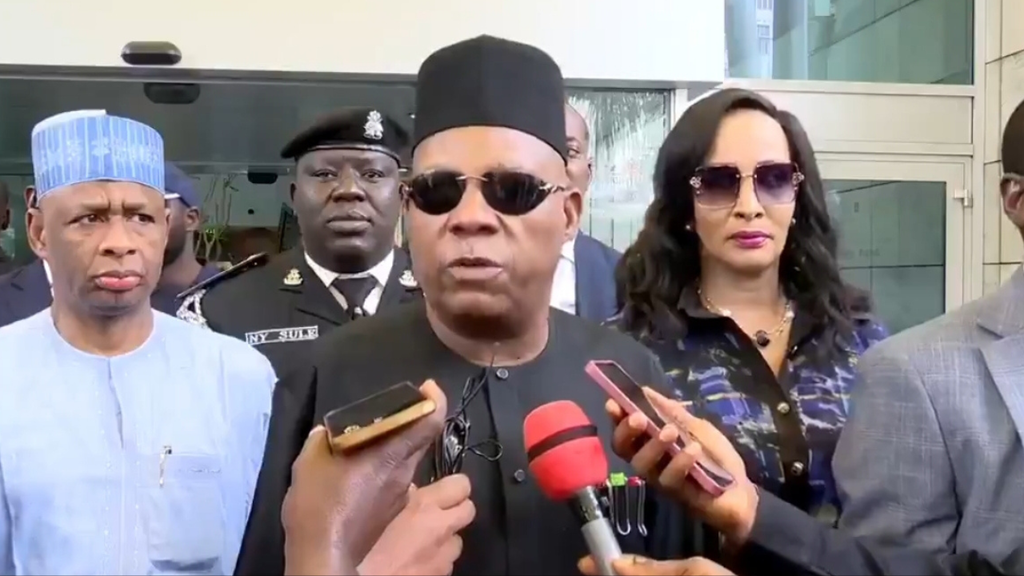
Nigerian Vice President Kashim Shettima delivered a formal complaint at the 21st Extraordinary Session of the African Union Assembly in Luanda, Angola on 30 August 2026 on behalf of President Bola Tinubu, calling on the AU to place xenophobic attacks against foreign nationals in South Africa on the agenda of the January 2027 AU Assembly. Image: Supplied/NAN
Nigerian President Bola Tinubu formally reported xenophobic and Afrophobic attacks against Africans and foreign nationals in South Africa to the African Union on Saturday 30 August 2026. The Nigeria AU xenophobia complaint went before the 21st Extraordinary Session of the AU Assembly in Luanda, Angola. Furthermore, Tinubu called on the AU to place the matter on the January 2027 agenda. As a result, South Africa now faces formal scrutiny over the treatment of foreign nationals at the continent’s highest diplomatic level.
Nigerian Vice President Kashim Shettima delivered the message on Tinubu’s behalf in Luanda. The statement was measured but direct. “Nigeria wishes to express its concern over the recurring xenophobic and Afrophobic attacks against Africans and other nationals in South Africa. While recognising South Africa’s sovereign right to enforce its immigration laws and acknowledging its contributions to the continent, Nigeria stresses that such attacks undermine African solidarity, unity and peaceful coexistence, and require urgent collective attention,” Shettima said. Furthermore, Tinubu called on African leaders to commit to the safety and dignity of all African nationals. As a result, Nigeria made clear it was seeking a formal continental response with a specific timeline.
Nigeria acknowledged South Africa’s right to enforce its own immigration laws. That matters. It shows Nigeria is not arguing against border management. What Nigeria is arguing is that the manner in which the immigration debate played out in South Africa crossed a line the African Union cannot ignore. Violence against foreign nationals, intimidation and destruction of property all featured in Nigeria’s complaint. Furthermore, Tinubu urged African leaders to commit to home-grown solutions and shared responsibility. As a result, Nigeria’s position frames xenophobia as a threat to African continental unity, not just a human rights issue.
Nigeria was one of the countries most directly affected by South Africa’s June 2026 immigration crisis. Nigerian nationals faced intimidation, displacement and violence around the 30 June 2026 anti-immigration deadline. The Nigerian government chartered evacuation flights for its nationals. Nigerian community groups recorded widespread attacks on Nigerian-owned businesses across Gauteng. Furthermore, Nigeria had engaged South Africa through diplomatic channels before without a satisfactory outcome. As a result, taking the matter to the AU marks a shift from quiet diplomacy to formal multilateral pressure.
Nigeria is not alone. Ghana petitioned the African Union separately over the treatment of Ghanaian nationals in South Africa. Two Ghanaian nationals filed a petition with the International Criminal Court arguing the attacks could amount to crimes against humanity. Zambia and Malawi raised similar concerns through diplomatic channels. Furthermore, ECOWAS announced investigations into attacks on West African nationals in South Africa. As a result, Nigeria’s AU complaint is the highest-level escalation yet in a continent-wide response to South Africa’s immigration crisis.
South Africa maintained throughout the crisis that it does not accept xenophobia. President Cyril Ramaphosa condemned violence against foreign nationals on 7 June 2026. NatJoints made 195 arrests for anti-immigrant violence between March and June 2026. The government helped more than 25,000 foreign nationals return home. Furthermore, South Africa argued that unemployment and inequality are root causes that regional development must address. As a result, the government is likely to push back against the Nigeria complaint by pointing to the steps it has already taken.
The 40th Ordinary Session of the AU Assembly takes place in January 2027. If Nigeria’s request succeeds, South Africa will face a formal discussion of its treatment of foreign nationals in front of every AU member state. South Africa has long positioned itself as a champion of African solidarity. Furthermore, it holds significant influence within the AU through its economic weight and diplomatic role. As a result, the January 2027 session could become one of the most significant diplomatic tests South Africa has faced on the African continent since the end of apartheid.
You may also be interested in: Rwanda Tells African Countries to Stop Blaming South Africa and Address Root Causes of Migration.