

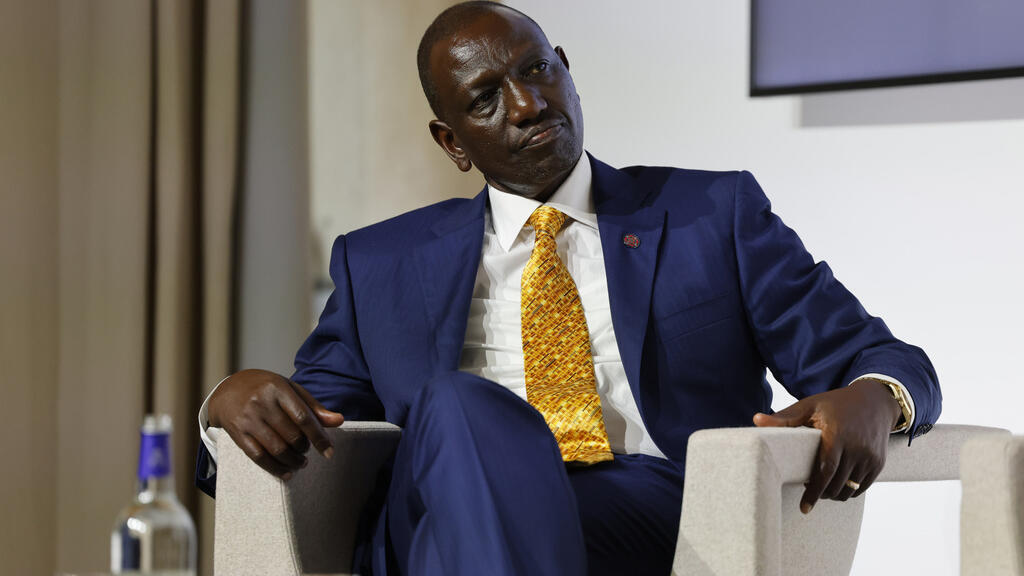
Kenyan President William Ruto ordered a crackdown on foreigners operating small-scale businesses at a meeting with MSME traders at State House in Nairobi on Wednesday 2 September 2026, giving foreign traders until 7 September 2026 to close their businesses. Image: Ludovic Marin
Kenyan President William Ruto ordered a crackdown on foreigners operating small businesses in Kenya on Wednesday 2 September 2026. The Kenya foreign traders crackdown gives foreign nationals until 7 September 2026 to close their small businesses. Furthermore, Ruto made the announcement at a meeting with traders at State House in Nairobi. As a result, thousands of foreign nationals face a deadline that could change their livelihoods overnight.
Ruto was blunt and direct. “From next week, all foreign traders doing those small businesses should close them,” he said. He added that his government would fast-track legislation to stop foreigners from operating in certain areas of trade. Ruto specifically named Chinese traders. “It cannot be that a person comes from China or elsewhere to be a hawker or open a small shop,” he said. Furthermore, Ruto said Kenya remained open to foreign investment but insisted investors should create jobs rather than compete with Kenyans in small retail. As a result, Kenya drew a clear line between large-scale foreign investment and small-scale foreign trading.
Enforcement begins the week of 7 September 2026. Ruto directed officials to review how investor and business permits are being issued. Kenya’s Class G business permit requires proof of at least US$100,000 in investment capital. The government had not published a list of affected businesses at the time of the announcement. Furthermore, a Trade Bill before Parliament proposes that foreign companies employ Kenyans as at least 80% of their workforce. As a result, the legislative framework behind the crackdown is already moving.
The announcement raised immediate questions for African migrants in Kenya. Nigerians, Ethiopians, Somalis and other African nationals are part of Kenya’s informal economy. Many run small shops, food stalls and hawking businesses in Nairobi and other cities. The government has not clarified whether the crackdown applies equally to African and non-African foreigners. Furthermore, a Burundian street vendor in Nairobi was recently confronted and accused of taking business from Kenyans. As a result, the policy arrives in an environment where anti-foreigner feeling is already present.
The South Africa angle to this story is significant. Ruto visited South Africa on a state visit from 3 to 5 June 2026. At a joint press conference with President Ramaphosa at the Union Buildings he was notably lenient on the xenophobia issue. He argued that migration pressures were largely the result of uneven economic development across the continent. “I think part of the challenge South Africa is facing is that it is a much more developed country and therefore it is easier for people to come here in search of services and opportunities. The answer is to ensure that services and opportunities exist everywhere across our continent,” Ruto said. Furthermore, three months after that visit, Ruto is ordering foreign traders out of Kenya’s informal economy. As a result, critics say the economic pressures driving Kenya’s crackdown are the same pressures Ruto told South Africa to address through continental development.
Ruto draws a distinction between violence and legal enforcement. South Africa’s crisis involved intimidation and destruction of property. Ruto’s crackdown is a legal and administrative measure. However, the economic argument behind both situations is the same. Foreign nationals compete with locals for scarce opportunities and politicians respond with restrictions. Furthermore, a one-week deadline gives foreign traders almost no time to wind up businesses or make plans for their families. As a result, the human cost of the Ruto crackdown could be severe even through legal channels.
Kenya has not seen anti-migrant violence on the scale of South Africa. However, Ruto’s policy shows that the tension between local economic interests and foreign nationals in informal economies is not a South African problem alone. It is an African problem. High youth unemployment and inequality exist across the continent. Furthermore, foreign nationals in informal economies often become targets for political pressure regardless of which country they are in. As a result, the Ruto crackdown is part of a broader continental pattern the African Union should address rather than directing its attention at South Africa alone.
Also read: Ramaphosa Immigration Address: President Announces Tighter Borders and Dedicated Immigration Courts.