

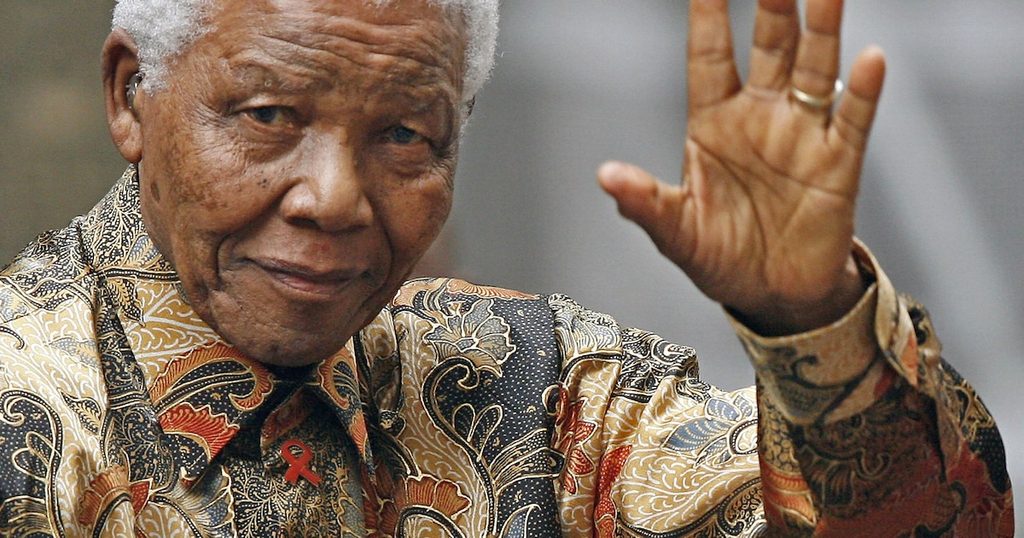
The Constitutional Court in Johannesburg heard arguments on Monday 8 September 2026 in the dispute between Makaziwe Mandela and the South African Heritage Resources Agency over 29 of the late President Nelson Mandela’s personal belongings which Makaziwe plans to sell through a New York auction house. Image: AFP/Leon Neal
The Constitutional Court heard arguments on Monday 8 September 2026 in a battle between the South African state and Nelson Mandela’s daughter Makaziwe over 29 of the late president’s personal belongings. The Mandela estate auction Constitutional Court case centres on Makaziwe’s plan to sell her father’s items through a New York auction house. Furthermore, SAHRA, the Robben Island Museum and the Department of Sport, Arts and Culture are fighting to block the sale. As a result, a case that began in 2021 has reached the highest court in the land.
The 29 items include Mandela’s green identity document from after the 1994 elections, his iconic Madiba shirts, his hearing aids and his walking stick. Makaziwe says she inherited the items privately and has the right to sell them. She plans to use the proceeds to fund the Mandela Memorial Garden and museum in Qunu in the Eastern Cape. Mandela grew up in Qunu and the village buried him there. Furthermore, lower courts already sided with the Mandela family. As a result, SAHRA and the state bodies are before the Constitutional Court seeking to overturn those rulings.
The dispute began in 2021 when SAHRA learned that Makaziwe and Christo Brand, Mandela’s former Robben Island prison warder, planned to auction the items in the United Kingdom. His prison key was set to fetch more than £1 million. SAHRA went to court to block the sale. The agency argued the items carry cultural significance and special value for future generations. Furthermore, the state argues heritage laws must apply to items linked to figures of exceptional national importance even when privately owned. As a result, the Constitutional Court must decide how far heritage laws can restrict private inheritance rights.
Mandela’s estate remains formally unwound more than a decade after his death in December 2013. Retired Deputy Chief Justice Dikgang Moseneke, the last surviving executor, asked to participate in the proceedings as a friend of the court. He alleged in court papers that someone removed Mandela belongings without the knowledge of the executors, the Nelson Mandela Trust or Mandela’s widow Graça Machel. Furthermore, the Houghton property in Johannesburg where Mandela spent his final years accumulated unpaid bills and fell into disrepair. As a result, the unsealed estate and the disputed auction reflect unresolved legal and financial questions surrounding Mandela’s legacy.
The auction collection includes items beyond the 29 objects in dispute. Makaziwe intended to sell personal effects, clothing and items linked to Mandela’s life in politics and prison. Brand also planned to sell items in his possession. Heritage authorities consider Brand’s collection significant. Furthermore, the auction was set for this month but stopped pending the Constitutional Court’s ruling. As a result, Monday’s hearing will determine whether the sale can go ahead at all.
The Constitutional Court’s ruling will carry weight beyond this specific dispute. It will set a precedent for how South African law treats objects linked to anti-apartheid activists and liberation figures. The ruling could shape how museums, heritage agencies and private families negotiate ownership of significant historical objects. Furthermore, the question of who owns and controls South Africa’s liberation history remains unresolved. As a result, the Mandela family versus SAHRA case is about far more than 29 personal items. It is about who has the final say over South Africa’s most cherished historical legacy.
For more on South African heritage law visit Abdullah Ibrahim Dies at 91: South Africa Loses the Man Nelson Mandela Called Our Mozart .