

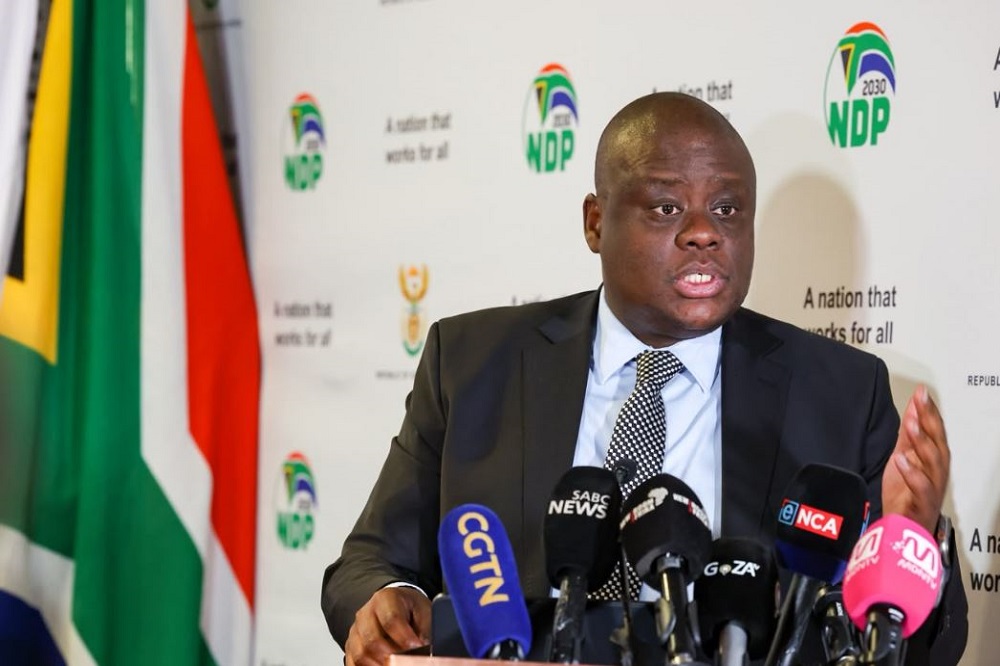
Home Affairs Deputy Minister Njabulo Nzuza confirmed on Sunday 14 June 2026 that some displaced foreign nationals in Durban have opted to return to their communities rather than accept repatriation to their home countries. Image: Supplied/DHA
Home Affairs Deputy Minister Njabulo Nzuza confirmed that some displaced foreign nationals in Durban have chosen to go back to their communities rather than leave South Africa. The Nzuza Durban foreign nationals update adds a new angle to the migration situation in KwaZulu-Natal. Furthermore, it shows that not all displaced migrants want to leave despite the pressure they face. As a result, the government now handles both voluntary repatriation and community reintegration at the same time.
Nzuza Durban Foreign Nationals Update: What the Deputy Minister Said
Nzuza gave an update on conditions in Durban on Sunday 14 June 2026. Some foreign nationals who fled to Sydenham and other parts of KwaZulu-Natal have changed their minds about leaving. Furthermore, they want to go back to the areas where they lived and worked before the unrest began. As a result, the government now runs both repatriation convoys and reintegration support at the same time.
Nzuza did not give exact numbers of those choosing to stay. However, the government is clearly treating this as more than a simple deportation exercise. Furthermore, many foreign nationals hold valid South African documentation and have lived in their communities for years. As a result, pushing them out would create serious legal problems for the government.
The Sydenham Gathering That Shocked South Africa
Between 4,000 and 6,000 Malawian nationals gathered in Durban’s Sydenham suburb last week. They fled anti-migrant threats across KwaZulu-Natal and needed a safe place to wait. The Malawian embassy set up a repatriation effort directly from the area. The first group of 258 boarded buses home on Saturday 13 June 2026. Furthermore, more convoys are on the way for those who still want to leave. However, some of those who gathered in Sydenham have now decided to return to their South African homes instead.
The Reintegration Challenge
Sending displaced migrants back into communities where anti-migrant feeling remains strong is not easy. Many fled after people threatened them or attacked their neighbours. Furthermore, the 30 June 2026 deadline set by protest movement March and March is still in place. As a result, migrants who go back to their communities before that date still face real risks.
SAPS has stepped up its presence in areas with large numbers of foreign nationals. Furthermore, President Cyril Ramaphosa said clearly in his national address on 7 June 2026 that police will act against anyone who threatens or attacks foreign nationals. As a result, the government has committed to protecting those who choose to stay within the law.
Voluntary Repatriation Continues in Parallel
While some migrants choose to stay, repatriation operations continue for those who want to go. Malawi brought its first groups home by road from both the Western Cape and KwaZulu-Natal. Ghana flew hundreds of its citizens back from Johannesburg. Nigeria approved five evacuation flights. Furthermore, Zimbabwe brought 74 of its citizens home from the Western Cape. As a result, this is one of the biggest cross-border humanitarian operations southern Africa has seen in years.
Home Affairs confirmed that voluntary repatriation means exactly that. No foreign national with valid papers faces forced removal. Furthermore, those without valid documents go through standard immigration processes rather than protest-linked deportations. As a result, the government draws a clear line between voluntary departure and law enforcement action.
What Happens Next
The situation in Durban and KwaZulu-Natal is still changing. More repatriation convoys will leave in the coming days for those heading home. Furthermore, SAPS and Home Affairs teams keep watching conditions on the ground to protect both those leaving and those staying. As a result, how the government handles the next two weeks before the 30 June deadline will be closely watched by communities, opposition parties and regional governments.