

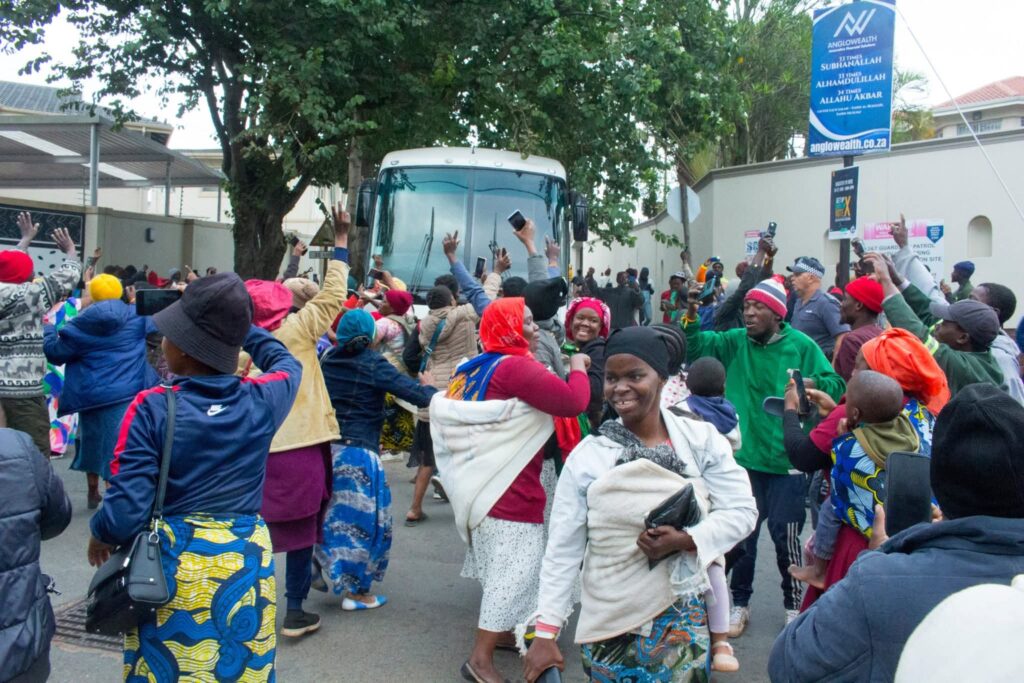
Between 4,000 and 6,000 Malawian nationals gathered in Durban’s Sydenham suburb after fleeing threats from anti-migrant protests across KwaZulu-Natal. The Malawian repatriation Durban operation began on Saturday 13 June 2026 with the first group of 258 boarding buses for the long road home. Furthermore, the Malawian embassy coordinated the effort directly on the ground. As a result, the scale of the Sydenham gathering represents one of the largest single concentrations of displaced foreign nationals in South African history.
Malawian Repatriation Durban: What Happened in Sydenham
Thousands of Malawian nationals converged on Sydenham in Durban in the days leading up to Saturday. They fled their homes, workplaces and informal settlements after anti-migrant protest groups threatened foreign nationals across KwaZulu-Natal. Furthermore, many arrived with only the belongings they could carry, having left everything else behind out of fear for their safety. As a result, Sydenham became an emergency gathering point for a displaced community seeking safety in numbers while waiting for a way home.
The Malawian embassy deployed staff and resources to Sydenham to coordinate the repatriation effort. Furthermore, they registered individuals, verified documentation and organised the bus convoy that departed on Saturday. The first group of 258 boarded buses and began the long overland journey back to Malawi. As a result, thousands more remain in Sydenham waiting for further buses to be arranged.
The Fear That Drove Them to Sydenham
The gathering in Sydenham reflects the level of fear among Malawian nationals in KwaZulu-Natal following weeks of escalating anti-immigrant pressure. Anti-migrant protest groups have issued ultimatums demanding that undocumented foreign nationals leave South Africa before 30 June 2026. Furthermore, door-to-door intimidation campaigns targeting foreign nationals in informal settlements have been reported across multiple provinces. As a result, many Malawians chose to leave rather than wait to see whether the deadline would produce further violence.
The Western Cape had already seen significant violence. Homes burned in Mossel Bay. Hundreds of foreign nationals sought refuge in temporary camps. Two Mozambican nationals died in that violence according to Western Cape police. Furthermore, the fear generated by those events spread rapidly to other provinces as word travelled through migrant communities. As a result, Malawians in KwaZulu-Natal chose not to wait for violence to reach them before seeking to go home.
The Scale of the Gathering
Between 4,000 and 6,000 people gathering in a single Durban suburb is an extraordinary development. Sydenham has historically had a significant Malawian community. However, the current numbers far exceed the area’s normal population. Furthermore, the gathering creates significant logistical and humanitarian challenges. People need food, water, sanitation and shelter while waiting for buses. As a result, local community organisations, religious groups and civil society bodies have been called upon to assist with basic needs.
The Malawian embassy’s decision to coordinate the repatriation directly from Sydenham rather than through official government channels shows the urgency of the situation. Getting 4,000 to 6,000 people home requires dozens of buses, significant fuel costs and coordination with authorities in Mozambique and Zimbabwe for transit. Furthermore, the journey from Durban to the Malawian border is approximately 2,000 kilometres. As a result, each convoy takes several days to complete the return journey.
South Africa’s Position
The South African government has consistently maintained that it does not condone threats against or intimidation of foreign nationals. President Cyril Ramaphosa said clearly in his national address on Sunday 7 June 2026 that there is no space for xenophobia in South Africa. Furthermore, SAPS confirmed it would act against anyone inciting violence or intimidation ahead of the 30 June deadline. As a result, police presence in areas with high concentrations of foreign nationals has increased across multiple provinces.
However, the fact that thousands of Malawians felt unsafe enough to abandon their homes, jobs and possessions and gather in a Durban suburb to wait for buses home tells its own story about conditions on the ground for foreign nationals in South Africa during this period.
The Broader Regional Repatriation Picture
The Durban Sydenham gathering and Saturday’s departure of the first 258 add to a rapidly growing regional repatriation operation. The first group of 150 Malawians returned home by road from the Western Cape on 8 June 2026. Ghana repatriated approximately 680 citizens over the weekend of 7 and 8 June. Nigeria approved five evacuation flights for its nationals. Furthermore, 74 Zimbabweans returned home from the Western Cape on 7 June. As a result, South Africa is simultaneously managing an immigration enforcement drive and an extraordinary regional diplomatic and humanitarian response from multiple African governments.
Anyone needing assistance or information about the Malawian repatriation process can contact the Malawian High Commission in Pretoria directly.
Editors Note All information in this article is based on reports from the Sydenham repatriation operation published on 13 June 2026. The figures of 4,000 to 6,000 gathered Malawians are estimates from media reports and have not been officially confirmed by the Malawian embassy or South African authorities. Mzansi Today Live will update this article as further information becomes available.