

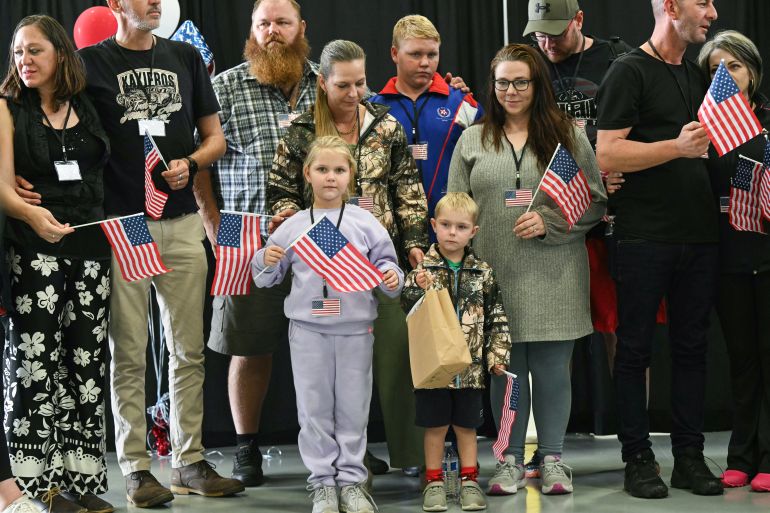
Afrikaner families who took up Trump’s refugee offer are reconsidering as life in the United States proves harder than expected. Image: Getty images
Some Afrikaner refugees returning to South Africa from the United States are discovering that leaving the Trump refugee programme comes at a steep price. Afrikaner refugees returning to South Africa have cited the high cost of living in the US as a key reason for reconsidering their decision to emigrate, and the fallout from those returns is now embarrassing the Trump administration’s flagship refugee initiative.
The programme launched in February 2025, when the Trump administration granted refugee status to white South Africans it claimed faced persecution under South Africa’s land expropriation policies. The South African government and many Afrikaners themselves rejected the genocide narrative. Critics called it a politically motivated scheme designed to appeal to Trump’s base rather than address a genuine humanitarian crisis.
Furthermore, cracks in the programme emerged early. Immigration lawyer Evan Gelobter described returning refugees as a major liability for the scheme. “Actions of these people who come here, because it wasn’t the lap of luxury, because conditions might not have been perfect, and decide to go back, have the potential to end, or significantly undermine the refugee programme,” he said. He called any voluntary return to South Africa “the kill shot” for the programme’s credibility.
Afrikaner Refugees Returning to South Africa Face US Consequences
One family found out how serious those consequences are. An Afrikaner family that returned to South Africa briefly for medical treatment lost their ability to re-enter the United States. US policy prohibits refugees from travelling back to their country of origin without prior government approval. The family did not obtain that clearance and authorities denied them re-entry, leaving them stranded despite their granted refugee status.
Participants in the programme received government-chartered flights to the US, repayable in instalments once they found employment, along with a R2,000 grant and resettlement support. Those who leave voluntarily face questions about whether they owe those costs back. Reports indicate the US government has warned some participants that they made an oath upon entry and cannot simply walk away from their obligations.
In addition, analysts say the returns damage the programme’s core argument. The Hudson Institute’s Joshua Meservey noted the returnees “indisputably” undermine the rationale for the scheme. If South Africa was truly dangerous enough to warrant refugee status, voluntary returns for reasons of affordability raise uncomfortable questions about the basis of the original claims.
Approximately 6,500 South Africans arrived in the United States under the programme since its launch. The Trump administration has maintained the initiative remains on track, but the returning families and the story of the healthcare family have drawn fresh scrutiny to a programme that was controversial from the start.
Read also: Boksburg Woman Carin Cilliers Dies in Texas Two Months After Arriving as Afrikaner Refugee