

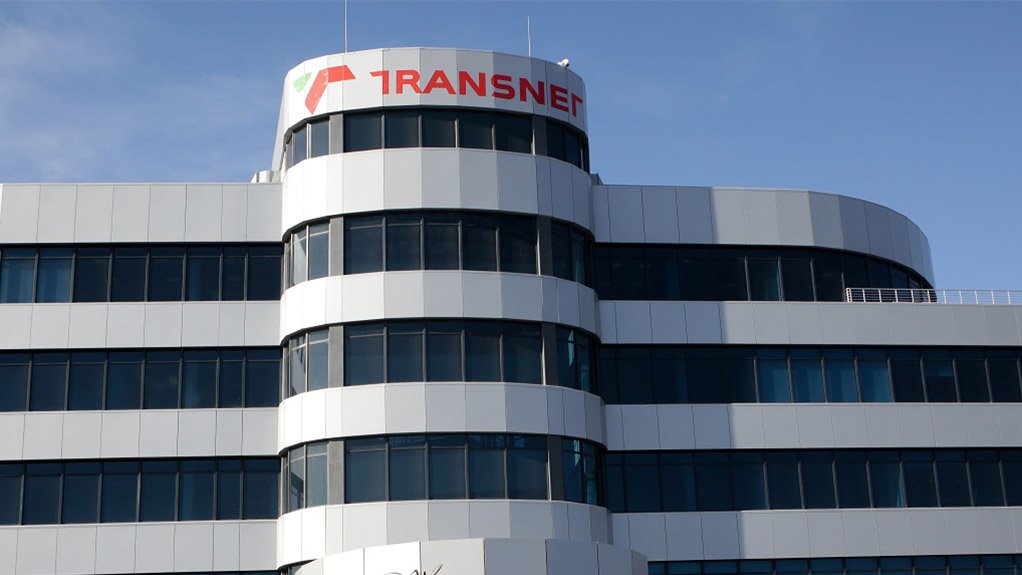
Transnet Group CEO Michelle Phillips presented the group’s annual financial results at Sandton in Johannesburg on Thursday 10 September 2026, revealing a R4.6 billion profit for the year ended 31 March 2026, the first annual profit Transnet has posted in four years. Image: Supplied/Transnet
South African state logistics group Transnet reported a R4.6 billion profit for the financial year ended 31 March 2026 on Thursday 10 September 2026. The Transnet profit 2026 result marks the first annual profit in four years. Furthermore, the result compares to a R1.9 billion loss the year before and represents a dramatic turnaround for a state entity that came close to a debt default in recent years. As a result, one of the most important companies in South Africa’s economy has returned to financial health for the first time since the COVID-19 era.
The profit came from two main sources. The sale of a 49.999% interest in Durban’s Pier 2 terminal to International Container Terminal Services Inc generated a profit of R12.5 billion. Without that sale Transnet would have posted another loss. Rail and pipeline volumes also improved. Rail volumes grew 4.9% to 167.9 million tonnes. Petroleum pipeline volumes increased to 14.2 billion litres from 13.37 billion litres. Furthermore, revenue grew 7.1% to R88.6 billion. As a result, the underlying business showed genuine improvement even before the asset sale.
Transnet CEO Michelle Phillips presented the results at Sandton in Johannesburg. She said the group reinforced its focus on execution and integration across its divisions. “Improved co-ordination across rail, ports and pipelines supported a more integrated approach to logistics delivery. While risks remain, the business’s underlying performance has strengthened, providing a more resilient foundation,” Phillips said. Furthermore, she confirmed that 11 private operators now have access to Transnet’s rail network. Some are expected to begin operations by 2027. Those operators could add 24 million tonnes of capacity initially, rising to 52 million tonnes. As a result, the reform of South Africa’s rail network is moving from planning to reality.
Transnet chairperson Andile Sangqu said the first profit in four years reflects better operations and tighter discipline. He noted that engagement with international development finance institutions showed growing investor confidence. The Agence Française de Développement provided support during the year. “The board is cautiously optimistic about the path ahead. Progress has been made in stabilising the organisation and advancing key reforms,” Sangqu said. Furthermore, Transnet has moved into implementing its Reinvent for Growth strategy. As a result, the group enters the new financial year with momentum it has not had since before the state capture era.
The scale of Transnet’s problems over the past decade is worth understanding. The group’s decline under state capture was catastrophic. Corruption, mismanagement and a collapse in locomotive numbers destroyed the efficiency of South Africa’s freight rail and ports. Coal exporters lost R16 billion in export revenue in 2021 alone. Iron ore, chrome and other bulk exporters lost billions more. Furthermore, Transnet’s debt grew to approximately R150.7 billion from R144.8 billion the year before. The gearing ratio eased slightly to 49.4% from 49.6% thanks to the improved profit. As a result, the R4.6 billion profit is a genuine milestone but the group still has a long way to go.
The container throughput picture was less positive. Container volumes declined slightly to 4.048 million twenty-foot equivalent units from 4.092 million TEUs. That decline reflects ongoing challenges at South Africa’s ports. The ICTSI concession at Pier 2 is part of a broader strategy to bring private sector expertise into port operations. Furthermore, Transnet plans to invest R129.1 billion in infrastructure over the coming years. As a result, the investment pipeline reflects both the backlog Transnet must address and the scale of its recovery ambitions.