
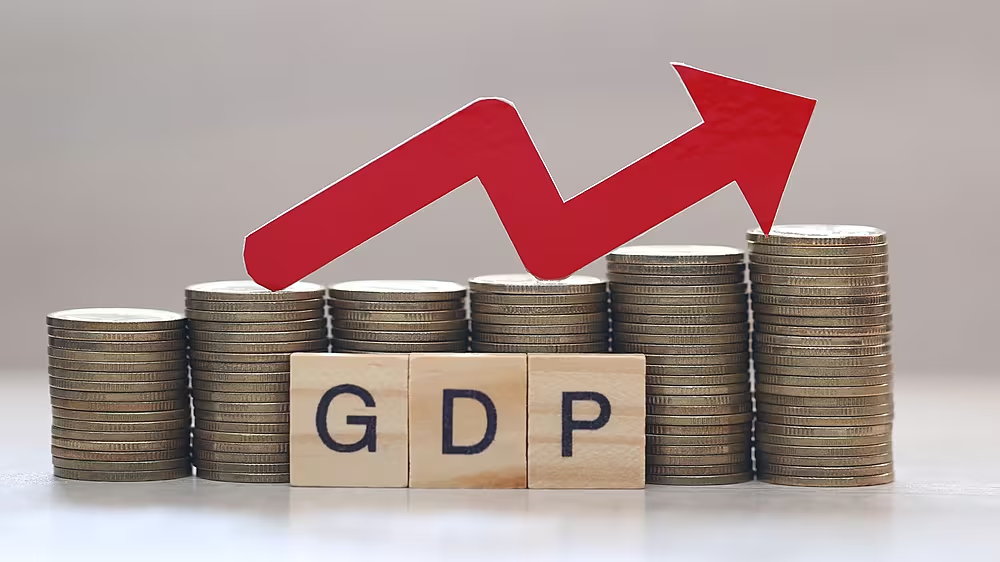
South Africa’s economy grew by 0.5% in the first quarter of 2026. Statistics South Africa released the South Africa GDP growth Q1 2026 figures on Tuesday 9 June 2026. Furthermore, the result marks the sixth consecutive quarter of economic expansion. As a result, the country’s slow but steady recovery continues despite persistent structural challenges.
South Africa GDP Growth Q1 2026: What Stats SA Said
Stats SA economist Bokang Vumbukani-Lepolesa presented the first quarter results on Tuesday. The finance, real estate and business services sectors drove the expansion. That sector alone grew by 0.9% and added 0.2 percentage points to overall GDP growth. Furthermore, household spending edged higher during the quarter, rising by 0.1% and contributing 0.1 percentage points to growth.
Vumbukani-Lepolesa described the figures as a slow but positive start to the year. However, she noted that the Middle East conflict broke out at the end of February. As a result, its full economic impact will only be reflected in second quarter figures. Therefore, the picture may look different when Stats SA releases the Q2 data later this year.
The 0.5% Q1 growth follows a 0.4% expansion in the final quarter of 2025. Furthermore, the six consecutive quarters of growth represent the longest growth streak since South Africa’s post-Covid recovery in 2021. As a result, analysts describe the trend as encouraging even if the pace remains modest.
Which Sectors Grew
Finance, real estate and business services led Q1 growth with a 0.9% expansion. Agriculture also contributed positively to the quarter’s results. Furthermore, the trade, transport and accommodation sectors added to the overall expansion. Net exports supported growth strongly. Exports of goods and services rose by 0.5%. At the same time, imports fell by 2.6%. Therefore, the combination of rising exports and falling imports strengthened South Africa’s trade position during the quarter.
However, manufacturing and investment spending remained weak during the quarter. These two areas continue to act as a drag on the country’s long-term growth prospects. Furthermore, gross fixed capital formation remains far below the level needed to drive sustained job creation and economic transformation.
What the Growth Means for Ordinary South Africans
A 0.5% GDP growth figure is positive news for the broader economy. However, most economists agree that South Africa needs sustained growth of at least 3% per year to make meaningful progress on unemployment and poverty. The country’s unemployment rate currently stands at 32.7%. Youth unemployment exceeds 45%. Therefore, the current pace of expansion is not sufficient to deliver the job creation that millions of South Africans urgently need.
South Africa’s per capita GDP growth remains negative. This means the economy is growing, but not fast enough to keep pace with population growth. As a result, the average South African is not getting richer even as the overall economy expands. Furthermore, Moody’s issued its first positive outlook for South Africa in May 2026, a sign that international investors are beginning to see the country’s recovery as credible. However, the ratings agency stopped short of a full upgrade, noting that significant risks remain.
The Broader Economic Context
The Q1 2026 growth figure arrives against a complex backdrop. South Africa faces new 12.5% US tariffs on its exports under the Trump administration’s latest trade action. Furthermore, automotive exports to the US fell sharply under earlier tariff regimes. The citrus sector has warned of tens of thousands of potential job losses if tariffs persist. As a result, the external trade environment represents one of the most significant risks to South Africa’s growth trajectory in the months ahead.
Domestically, the immigration debate and anti-immigrant protests have raised concerns about social stability and investor confidence. However, improvements in electricity supply, railway freight performance and port management have contributed positively to the economic environment. Furthermore, the South African Reserve Bank cut interest rates by 1.5 percentage points since late 2024, bringing the prime lending rate to 10.5%. As a result, borrowing costs for households and businesses have eased slightly.
Full year GDP growth for 2026 is projected at between 1.2% and 1.6% according to various economic forecasts. Therefore, the Q1 result keeps South Africa broadly on track with those projections even if the pace remains well below what the country needs to transform its economic landscape.
Editors Note All GDP figures referenced in this article are sourced from the Statistics South Africa Q1 2026 GDP release published on 9 June 2026. Mzansi Today Live will update this article as further information becomes available.