

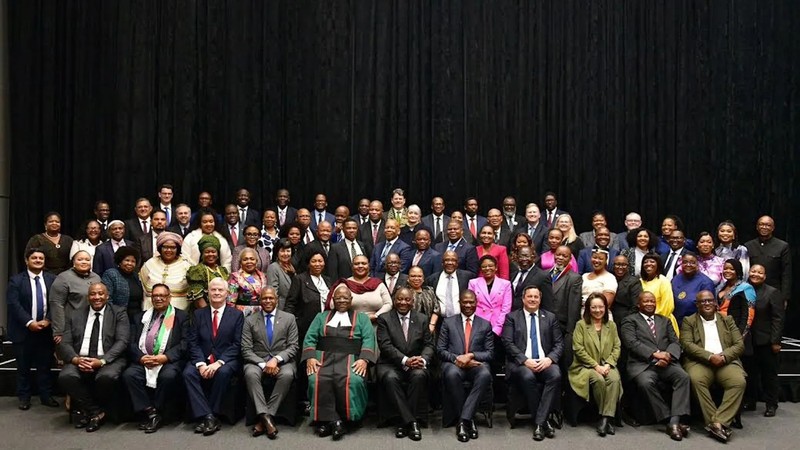
For almost three decades, South Africans have lived with decisions and deals made without them. Image supplied
For almost three decades, South Africans have lived with a painful routine. Government signs a major deal or makes a life changing decision, and ordinary people only find out once it is too late. Then, years later, the country pays the price. Time and again, the lack of real public consultation has turned government decisions into national burdens. Now, many South Africans are asking whether those decisions have finally come back to bite the very leaders who made them.
Government will argue that it follows the law, publishes notices and invites comment. However, a notice that nobody sees is not consultation. Neither is a public meeting held after the decision is already final. Real consultation means explaining decisions in plain language, listening to the people affected and changing course when they raise valid concerns. Sadly, the record shows how rarely that happens.
Is public consultation a favour or a duty?
Start with the asylum agreements. In the mid 1990s, the new democratic government signed the 1951 United Nations Refugee Convention, its 1967 Protocol and the OAU Refugee Convention. Parliament then passed the Refugees Act in 1998. Together, these commitments created one of the most open asylum systems in the world.
Crucially, the system set no limit on how many people could seek asylum. There was no annual cap and no quota. In addition, South Africa chose not to build refugee camps. Instead, asylum seekers could live in communities, work and study while they waited for decisions, which often took years.
Ordinary South Africans had very little say in those choices. Yet communities have carried the weight of them ever since, from overcrowded townships to long queues at refugee offices and a backlog of more than 100 000 asylum appeals. Even government now admits the system needs fixing. In 2024, a government White Paper proposed that South Africa withdraw from the UN Refugee Convention and rejoin with reservations.
Consider the arms deal too. In 1999, government signed weapons contracts worth about R30 billion at the time. Critics warned that a young democracy with deep poverty did not need submarines and fighter jets. Government went ahead anyway. The deal then produced years of corruption allegations, court cases and political scandal.
Then came the nuclear deal. Government quietly signed agreements with Russia and other countries to build new nuclear power stations, a project that could have cost hundreds of billions of rand. In 2017, the Western Cape High Court set the agreements aside. The court found that government had failed to follow proper procedures, including public participation.
Meanwhile, Gauteng motorists spent years fighting e tolls. They marched, refused to pay and warned that the system would fail. Government pushed ahead regardless. Eventually, the province scrapped the system after years of wasted money and broken trust.
Similarly, the Karpowership deal sparked fierce resistance. Government selected the Turkish company to supply emergency electricity from floating power ships for 20 years. Fishing communities and environmental groups raised alarm about the impact on their livelihoods and the cost to consumers. Many said nobody properly consulted them.
Energy also brings us to one of the biggest deals of all. In 2021, government signed the Just Energy Transition Partnership with the United States, Britain, France, Germany and the European Union. These partners pledged billions of dollars to help South Africa move away from coal. However, most of that money comes as loans that South Africans must repay, not as gifts. Then, in 2025, the United States walked away from its pledge altogether.
Meanwhile, the people with the most to lose had the least say. Coal communities in Mpumalanga depend on power stations and mines for thousands of jobs. Unions and residents have warned that the plan could leave entire towns without work. Many say government made the commitment abroad first and only explained it at home later.
In addition, government signed the National Health Insurance Act into law despite strong objections from doctors, medical schemes, business groups and opposition parties. Many of them argue that government brushed aside their concerns. As a result, the law now faces several court challenges.
Most recently, Home Affairs issued an asylum directive without even the minister’s knowledge, let alone the public’s. Within days, crowds overwhelmed refugee offices, protests turned violent, and government withdrew the directive.
In each case, the pattern stays the same. Government decides first. The public objects later. Then the courts, the taxpayer or the communities on the ground deal with the consequences.
Furthermore, the cost goes beyond money. Every time government acts without the people, it chips away at their trust. When leaders fail to explain themselves, rumours and misinformation fill the gap. Communities then feel ignored, and anger spills onto the streets. Over time, many South Africans stop believing that their voice matters at all. For a democracy, that may be the most dangerous cost of all.
To be fair, government does not need a referendum for every decision. Leaders must sometimes act quickly, especially in a crisis. Courts sometimes leave the state with little choice, and some decisions involve rights that the majority cannot simply vote away. Supporters of the refugee agreements point out that neighbouring countries sheltered South African exiles during apartheid. Similarly, supporters of the energy partnership argue that it offers cheaper finance than South Africa could find elsewhere and helps end load shedding. Government also argues that many of these deals went through Parliament and public comment periods.
Nevertheless, the results speak for themselves. Courts have overturned agreements. Billions of rand have gone to waste. Projects have collapsed under public pressure. In almost every case, government could have avoided the damage by simply listening first.
Democracy does not end on election day. South Africans elect leaders to serve them, not to sign away their future in private. If government keeps deciding for the people instead of with them, it should not act surprised when the people push back, or when the bill eventually arrives.
Read more