

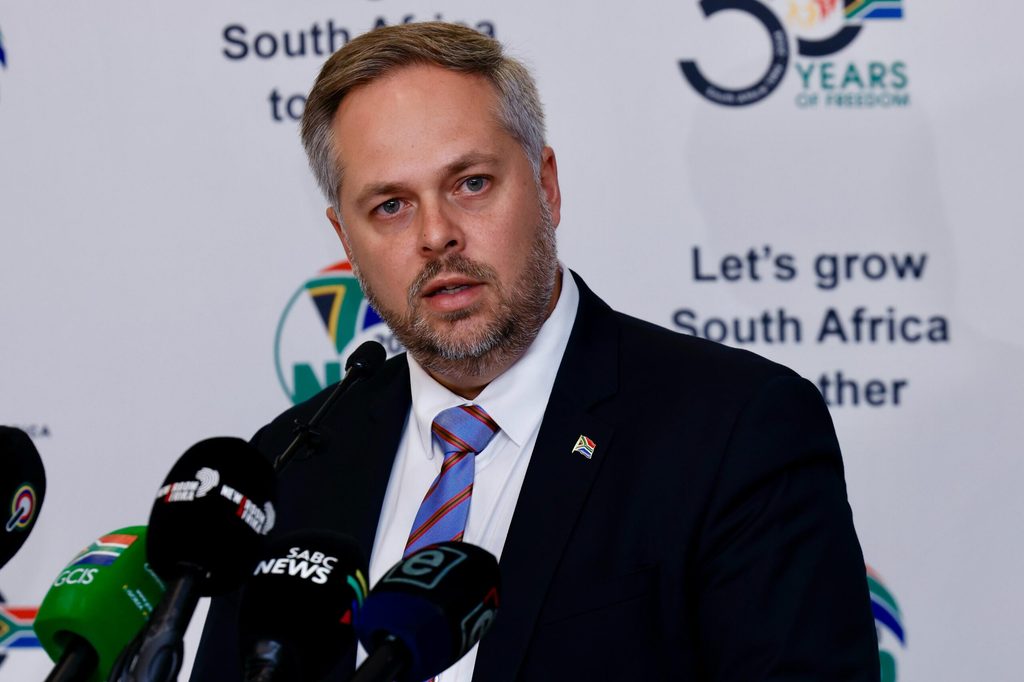
Home Affairs Minister Leon Schreiber says the department shifted its position on the asylum directive after the facts on the ground changed. Image credit Supplied
Home Affairs has withdrawn its directive on new asylum applications, just days after the instruction sparked chaos at refugee reception offices and violent protests in Soweto and Durban. With the asylum directive withdrawn, Home Affairs Minister Leon Schreiber has defended the sudden reversal.
Speaking in media interviews on Friday, Schreiber said the department had shifted its position because the facts had shifted. He also argued that the Constitutional Court could not have foreseen how its ruling would affect refugee reception centres and the communities around them.
Why the asylum directive was withdrawn
Home Affairs issued the directive on 28 September. It followed a Constitutional Court judgment on 7 July in a case brought by the Scalabrini Centre of Cape Town and Lawyers for Human Rights. The instruction told Refugee Reception Offices to accept new asylum applications, even from people who entered the country illegally, arrived without documents or reported late.
However, within days, the country’s five refugee reception offices were overwhelmed by applicants. According to Home Affairs, officials faced risks to their safety, and threats to public safety began to emerge. As a result, the director general withdrew the directive.
Furthermore, Home Affairs says officials issued the directive as an operational measure without the knowledge of Schreiber or any other political office bearer. The department also rejected claims that the directive was politically motivated. It pointed out that it had opposed the court case in the first place.
Violence in Soweto and Durban
The withdrawal came a day after protests against asylum processing turned violent. On Thursday, protesters attacked vehicles and foreign owned businesses in Soweto and Durban. According to acting police commissioner Puleng Dimpane, protesters torched 10 vehicles in Soweto and 14 in Durban.
In Orlando West, Soweto, protesters gathered near a Home Affairs office before moving towards foreign owned shops. Police also received reports of shots fired towards demonstrators. Meanwhile, in Durban, looters targeted shops, and officials told hundreds of asylum seekers outside the reception centre to leave for their own safety.
In addition, police arrested three foreign nationals for allegedly assaulting a protester. By Friday, calm had returned to both areas, although police remained on alert.
What happens next
Before the withdrawal, the inter ministerial committee on migration met on Wednesday night. Justice Minister Mmamoloko Kubayi said government respects the court judgment but faces serious operational challenges. She stressed that the ruling does not stop immigration enforcement or the deportation of people who do not qualify for protection.
The committee also announced plans to increase asylum processing capacity, improve biometric screening, speed up decisions and investigate fraud.
Importantly, the Constitutional Court judgment remains binding despite the withdrawal. The ruling does not grant anyone automatic refugee status, citizenship or permanent residence. Instead, it requires officials to consider each claim rather than reject applicants on technical grounds.
Home Affairs says it will develop a new approach to comply with the judgment. However, it has not said what rules apply at refugee offices in the meantime or when new instructions will follow. So far, the Scalabrini Centre and Lawyers for Human Rights have not publicly responded.
For now, with the asylum directive withdrawn, asylum seekers, officials and communities face uncertainty over how South Africa will carry out the court’s ruling.
Read more