

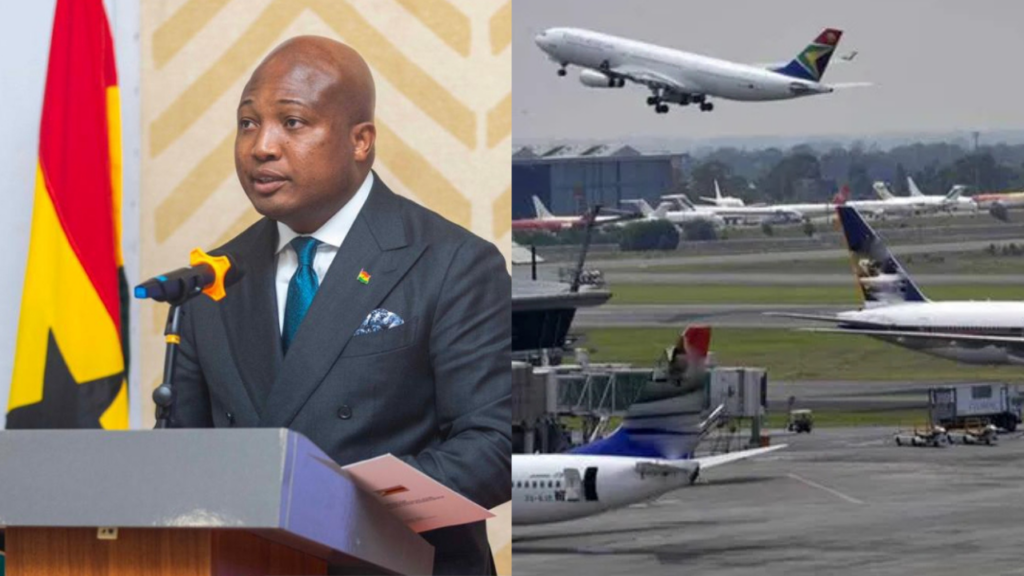
The Ghanaian government chartered a flight at state expense to evacuate 300 of its citizens from South Africa on Thursday morning amid claims of xenophobic attacks. When the specially chartered flight was scheduled to depart OR Tambo International Airport at 5am on 21 May 2026, only one person was in the departure section. His name is Sylvester Boakye. He is 22 years old. And he waited alone.
The Government of Ghana chartered a flight at its own expense to evacuate 300 citizens from South Africa on Thursday 21 May 2026 following weeks of diplomatic tension over what Accra described as a wave of xenophobic attacks against African migrants. The flight was scheduled to depart OR Tambo International Airport at 5am. When departure time came and went, only one person was there. South Africans have reacted with a mixture of disbelief and pointed commentary about the accuracy of the narrative that prompted the evacuation in the first place.
How It Got to This Point
Ghana’s Foreign Affairs Minister Samuel Okudzeto Ablakwa announced the evacuation on 19 May 2026, stating that the first batch of 300 Ghanaian nationals would be flown home from South Africa free of charge on a government-funded chartered flight. The minister said the welfare and safety of Ghanaians abroad was a non-negotiable priority of the Mahama administration and that the evacuation was part of an emergency consular response triggered on 12 May 2026.
The announcement came after weeks of escalating diplomatic tension between Ghana and South Africa. Ghana had summoned South Africa’s acting High Commissioner to formally express its government’s concerns about the safety of Ghanaian nationals. Accra had also formally requested that what it described as xenophobic attacks in South Africa be placed on the agenda of the African Union’s Mid-Year Coordination Summit. Ghana’s Coordinating Director for Political and Economic Affairs Harold Agyeman had told media that despite engagements between the two governments, conditions for foreign nationals in South Africa had not fully normalised.
The Ghanaian government also announced a special package for returning citizens including financial support in addition to the free flight, in what was presented as a comprehensive state-funded emergency response to a crisis affecting its citizens abroad.
One Person on a Plane for 300
When the chartered flight was scheduled to depart OR Tambo International Airport at 5am on Thursday 21 May 2026, only one person was in the departure section. His name is Sylvester Boakye, a 22-year-old Ghanaian national who had been living with fellow Ghanaians in Pretoria.
According to Newsroom Africa, Sylvester arrived at OR Tambo at 8pm on Wednesday evening, eager to take advantage of the free government-funded flight home. He was relieved to be going back to Ghana. But by 6am on Thursday morning he had discovered that no other Ghanaian expatriates had appeared for the scheduled 5am departure. To make matters worse, no government officials were available at the airport to provide him with any answers about what would happen next.
Sylvester Boakye had done everything right. He had registered with the High Commission. He had arrived the night before. He had shown up. He was alone.
The gap between the Ghanaian government’s stated intention of evacuating 300 citizens in urgent need of assistance and the reality of a single 22-year-old waiting alone in a departure section at OR Tambo with no officials available to assist him is difficult to overstate. It raises immediate questions about whether the narrative of widespread danger facing Ghanaian nationals in South Africa accurately reflected conditions on the ground, or whether the diplomatic and media response was significantly disproportionate to the actual situation experienced by Ghanaians living in the country.
South Africa’s Position
South Africa’s Minister of International Relations and Cooperation Ronald Lamola engaged directly with multiple African governments including Ghana in the weeks leading up to the evacuation, seeking to calm tensions and reassure foreign nationals living in the country. The South African Police Service confirmed it was working to arrest and prosecute those responsible for any acts of violence against foreign nationals and stressed that such acts did not represent the position of the South African government. President Cyril Ramaphosa reaffirmed the state’s commitment to addressing immigration challenges while maintaining law and order.
South Africa has consistently rejected the characterisation of recent events as a xenophobic crisis, pointing out that the government has been engaged in lawful immigration enforcement and that the protests that took place in Pretoria and Johannesburg were largely peaceful demonstrations calling for the enforcement of existing laws rather than attacks on foreign nationals.
The Smear Campaign South Africans Said Was Coming
South Africans online have been quick to connect Thursday’s evacuation outcome to a concern they had been raising for several weeks. Commentary across social media reflects the view that false and exaggerated reporting about the recent anti-illegal immigration protests portrayed what were largely peaceful demonstrations as violent xenophobic attacks. Reports circulating internationally had claimed multiple people were killed during the protests when the verified figure was one fatality.
The fact that Ghana chartered a government flight for 300 citizens fleeing what was described as a dangerous environment and that only one person chose to board has been widely interpreted by South Africans online as confirmation that the severity of the threat to foreign nationals in South Africa was significantly overstated. Many have noted the irony of a government spending significant public funds on an emergency evacuation that its own citizens did not believe they needed.
Whether the narrative of widespread xenophobic violence in South Africa accurately reflected events on the ground, or whether it formed part of the broader misrepresentation that South Africans had been warning about, is a question that Thursday’s almost-empty flight has placed firmly back in the centre of the national conversation.
What This Means for South Africa’s International Reputation
The diplomatic fallout from the past several weeks has been significant. Ghana raised the matter at the African Union. Multiple African countries issued travel advisories. International media ran extensive coverage framing South Africa as unsafe for African migrants. And the Ghanaian government spent public money chartering a plane to rescue citizens who, by and large, did not feel they needed rescuing.
One 22-year-old from Pretoria showed up. He waited through the night. He found himself alone. And somewhere in that image is the clearest possible answer to the question South Africans have been asking for weeks about whether the narrative being told about their country reflected the reality on the ground.
South Africa’s Foreign Affairs ministry had not yet issued a formal response to Thursday’s evacuation outcome at the time of publication. Mzansi Today Live will continue to follow developments in this matter as they emerge.
Editors Note The account of Sylvester Boakye and the evacuation outcome is based on a report by Newsroom Africa published on 21 May 2026. Mzansi Today Live will update this article if the Ghanaian government issues an official response or if further verified details emerge. The views expressed by South Africans online are those of members of the public and do not represent the editorial position of Mzansi Today Live.