

Health Minister Dr Aaron Motsoaledi briefed Parliament’s Portfolio Committee on Health on Wednesday, confirming that South African rats do not carry hantavirus. Image: Supplied
Health Minister Aaron Motsoaledi has moved to calm public fears after a deadly hantavirus outbreak linked to a cruise ship in the Atlantic Ocean killed three passengers and left a British national in critical condition in a Sandton hospital. The minister confirmed that South African rodents do not carry the virus and that the risk of a local outbreak remains low.
Health Minister Dr Aaron Motsoaledi has told Parliament that South African rats do not carry hantavirus, seeking to ease growing public concern following a deadly outbreak linked to the cruise ship MV Hondius in the Atlantic Ocean. Briefing the Portfolio Committee on Health on Wednesday 6 May 2026, Motsoaledi confirmed that the virus has never been recorded among rodents on the African continent and that South Africa’s response to the cases that arrived on its shores was swift and effective.
No Risk from Local Rodents
Motsoaledi addressed concerns that had been raised about whether South Africa’s significant rodent population particularly in densely populated areas such as Alexandra township in northern Johannesburg could pose a hantavirus transmission risk to local communities.
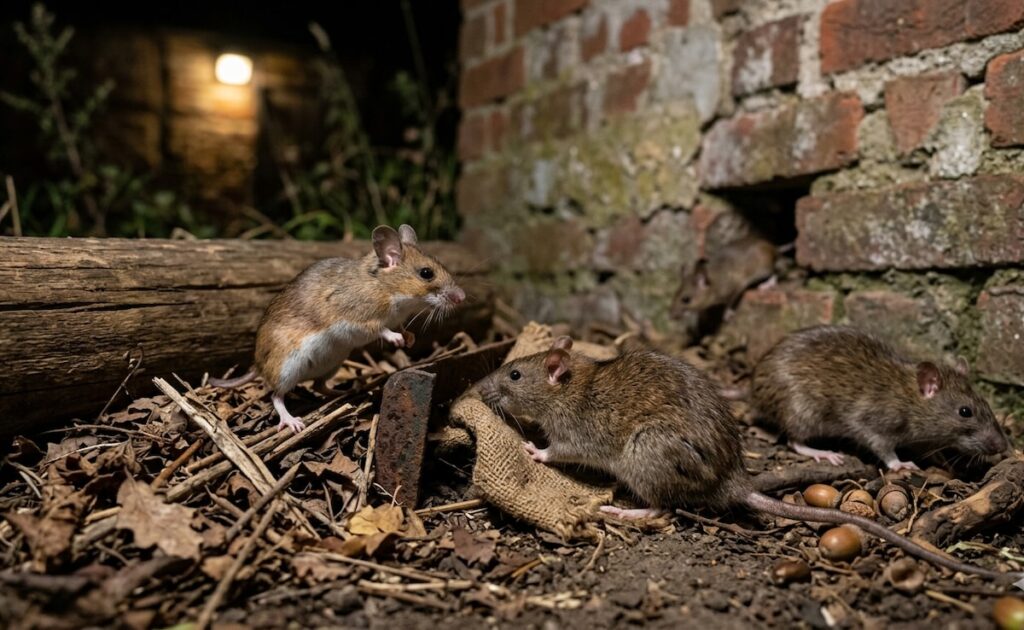
South African rats do not carry this virus. It is a virus that is found in the Americas in North and South America and it is a virus that is found in Europe and India. I do not know of any case that has ever been picked up in South Africa among the rats,” Motsoaledi told the committee.
The minister’s assurance was supported by Professor Lucille Blumberg, head of the National Institute for Communicable Diseases, who confirmed to the committee that testing conducted in southern Africa has not identified hantavirus in local rodent populations.
We do have a major rodent problem. So it is important to clarify that even though there has been limited testing of rodents in Southern Africa and Africa, we do not have hantavirus in this part of the world,” Blumberg said.
Motsoaledi added that there had been no recorded cases of hantavirus on the African continent and that he stood ready to be corrected if new evidence emerged. The minister emphasised the importance of addressing public concern with facts rather than allowing misinformation to drive unnecessary panic.
The Andes Strain: What South Africans Need to Know
The specific strain of hantavirus identified in the MV Hondius outbreak is the Andes strain one of 38 known hantavirus variants and the only strain documented to cause human-to-human transmission. Motsoaledi stressed that even this form of transmission is extremely rare.
It happens to be the only strain out of the 38 that is known to cause human-to-human transmission. But such transmission is very rare and only happens due to very close contact,” Motsoaledi told the committee.
The World Health Organisation had assessed the global threat level of the specific outbreak as low as of 4 May 2026. Motsoaledi confirmed that South Africa concurs with that assessment and that the risk of the outbreak developing into a national health emergency is low.
Contact Tracing in South Africa
South African health authorities have moved quickly to trace all individuals who may have come into contact with the two hantavirus patients who were brought to South Africa for treatment. Motsoaledi confirmed that 62 people have been identified through contact tracing and that 42 of those have already been contacted and are being monitored.
Blumberg confirmed that South African authorities detected the virus within 24 hours of receiving an alert from international colleagues about concerns on board the cruise ship.
It is important for the department to put the panic at ease with facts, because we are getting a lot of information coming in and out, Motsoaledi said.
The contact tracing process has included passengers who travelled on the same flight as the Dutch woman who collapsed at OR Tambo International Airport on 25 April 2026. Motsoaledi clarified that the woman was not visiting South Africa but was transiting through OR Tambo on her way back to the Netherlands following the death of her husband, who had died aboard the ship near Saint Helena. She collapsed at the airport and died at a nearby hospital. She later tested positive for hantavirus by PCR test.
Current Case Count and Fatalities
As of 4 May 2026, seven confirmed cases and five suspected cases have been linked to the MV Hondius outbreak, bringing the total number of affected individuals to twelve. Three people have died a 70-year-old Dutch man who died aboard the ship, his 69-year-old Dutch wife who died at a Kempton Park hospital after collapsing at OR Tambo, and a German national who died on board on 2 May 2026.
A 69-year-old British national remains in critical condition in the intensive care unit of a private hospital in Sandton. Three other patients are currently reporting only mild symptoms. A case has also been confirmed in Switzerland after a man contacted a Zurich hospital, bringing the outbreak’s international reach to multiple countries.
Motsoaledi addressed criticism that South Africa’s border health screening had been inadequate, pushing back firmly on that characterisation.
“It cannot be said that South Africa’s safety mechanisms were so relaxed that they just allowed people in without screening. Our health professionals are trained to anticipate individuals who have suspected diseases,” the minister said.
The MV Hondius Will Not Dock in South Africa
Motsoaledi confirmed that the MV Hondius, which had been anchored off Praia in Cape Verde, is now en route to Italy and will not be docking in South Africa. The ship had been refused permission to disembark passengers by Cape Verde authorities while investigations and medical evacuations were conducted.
The vessel departed Ushuaia in Argentina on 1 April 2026 carrying 149 people of 23 nationalities 88 passengers and 61 crew. It made stops in Antarctica before heading north through remote Atlantic island territories including Saint Helena and Ascension Island.
What South Africans Should Know
Based on the information presented to Parliament on Wednesday, South Africans have no reason to fear a local hantavirus outbreak. The virus is not present in South African rodents. The two patients treated in South Africa contracted the virus aboard a cruise ship in the Atlantic Ocean. Human-to-human transmission of the specific Andes strain involved is possible but extremely rare and requires very close contact. The WHO’s global risk assessment remains low. South African contact tracing is active and ongoing.
Editors Note All information in this article is based on the briefing delivered by Health Minister Dr Aaron Motsoaledi and Professor Lucille Blumberg to Parliament’s Portfolio Committee on Health on Wednesday 6 May 2026. Case numbers and fatality figures are based on WHO and NICD data as at 4 May 2026 and may have changed at the time of publication. Mzansi Today Live will continue to follow developments in this matter.