

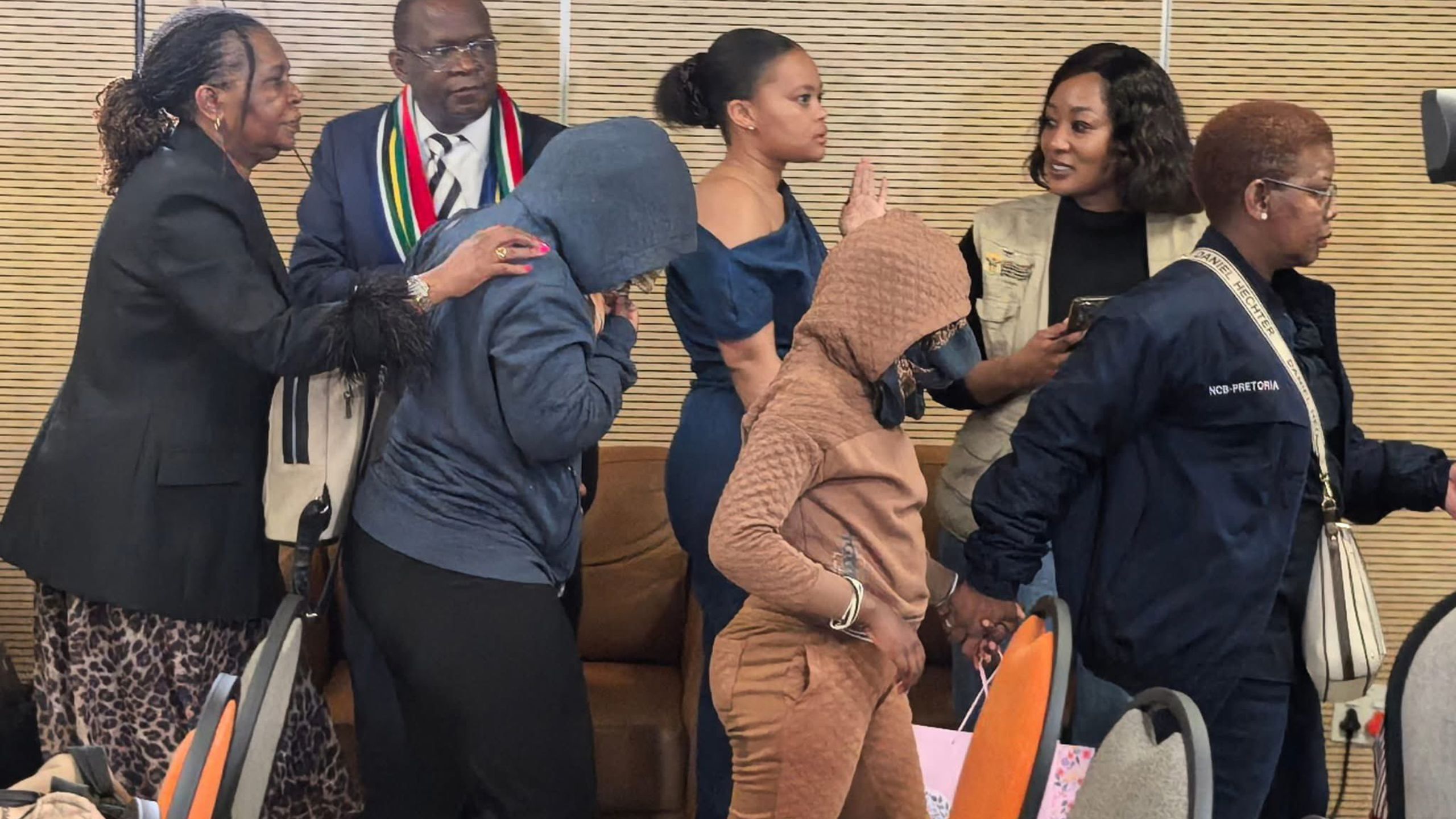
Social Development Minister Dina Pule received two South African girls aged nine and 15 at OR Tambo International Airport on Thursday 3 September 2026 after they were trafficked to Malawi nearly two years ago and rescued by Malawian authorities in July 2026. Image: Seipati Mothoa/TimesLIVE
Two South African girls aged nine and 15 trafficked across the border to Malawi have returned home after nearly two years of separation, confinement and alleged mistreatment. The South Africa Malawi human trafficking girls repatriation happened on Thursday 3 September 2026 at OR Tambo International Airport. Furthermore, Social Development Minister Dina Pule received the girls at the airport alongside senior government officials. As a result, the two children are back on South African soil and connected to the support services they need.
The case began when a Malawian man living in the Eastern Cape allegedly gained the family’s trust. He did this through a romantic relationship with the girls’ mother. He and a woman from the Eastern Cape then allegedly took the two girls across the border into Malawi. Once there, the girls faced deprivation of food. Authorities prevented them from attending school. They endured confinement and alleged mistreatment for nearly two years. Furthermore, their mother and grandmother eventually escaped back to South Africa and reported the crime to police. As a result, that report triggered the investigation that brought the girls home.
Malawian authorities rescued the girls on 9 July 2026 and placed them in a place of safety. South African officials then worked with their Malawian counterparts to speed up the return. Interpol South Africa and Department of Social Development officials travelled to Malawi on Sunday 30 August to facilitate the handover. Furthermore, Malawi told South African officials it lacked the capacity to house victims of crime for an extended period. As a result, both governments worked quickly to bring the girls home after the rescue.
Minister Pule spoke with visible emotion at OR Tambo on Thursday. “I stand before you today with mixed emotions as we gather to receive two children who were victims of human trafficking and who have now been safely repatriated to South Africa,” she said. She called the return an important step toward reuniting the girls with their family after prolonged hardship and trauma. Furthermore, she was clear about how the government views the case. “It is important to make it clear that this matter cannot simply be viewed as a missing persons case,” Pule said. As a result, the government treats this as a full human trafficking matter requiring the complete weight of the law.
The Department of Social Development has repatriated 22 children to date as part of its ongoing campaign. It authorised a social worker to accompany the girls on their return flight. Multiple departments worked together on the case. They included Home Affairs, the South African Police Service, the Directorate for Priority Crime Investigation, the Border Management Authority and civil society organisations. Furthermore, Interpol South Africa originally referred the case to the department. As a result, the repatriation involved coordinated work across multiple agencies and two governments.
The department asked media organisations to respect the children’s privacy. It requested that journalists refrain from photographing, filming or identifying the girls without appropriate consent. Pule said the department will work with Interpol and law enforcement to ensure those responsible face justice. “The return of these children to their country of origin and their families is an important step in their recovery and restoration of their rights as children,” Pule said. Furthermore, she said the repatriation is the beginning of a longer journey of support and healing, not the end of the process. As a result, South Africa’s commitment to these two girls does not end at the arrivals hall.
Human trafficking is one of South Africa’s most serious and underreported crimes. SAPS has warned that trafficking affects men, women and children alike. It takes many forms including sex trafficking, forced labour, illegal adoption, organ trafficking, forced begging and coercing victims into criminal activity. South Africa is both a source country and a transit and destination country for traffickers. Furthermore, the Joshlin Smith case in 2026 brought renewed national attention to the scale of child trafficking. As a result, the return of these two girls from Malawi is a reminder that behind every trafficking statistic is a child and a family whose life a trafficker chose to destroy.
Also read: Hawks Arrest Second Suspect in KuGompo City Human Trafficking Case as Yonela Sapepa Found in Johannesburg.
Editors Note The identities of the two girls have not been disclosed in line with the Department of Social Development’s request to protect their privacy and dignity.