

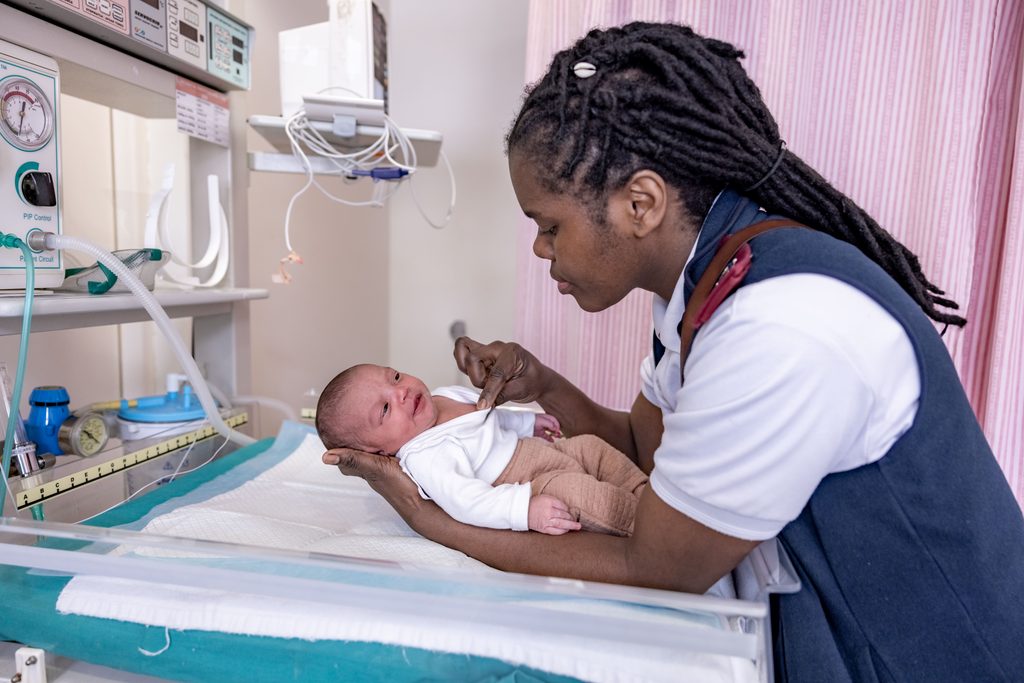
Statistics South Africa confirmed in 2026 that the country’s fertility rate has dropped to 2.1 children per woman, the lowest level ever recorded, as rising costs of living, career priorities and changing attitudes toward parenthood reshape South African family life. Image: K Schermbrucker / WHO.
South Africa’s fertility rate dropped to 2.1 children per woman in 2026, the lowest level ever recorded. The South Africa birth rate decline reflects a long-term trend that saw the rate fall from 2.78 children per woman in 2008 to 2.21 in 2025 and now to 2.1 in 2026. Furthermore, Statistics South Africa confirmed the population continues to grow despite the declining fertility rate. As a result, South Africa is entering a new phase where growth continues but at a much slower pace than before.
The 2.1 figure puts South Africa right at replacement level. Replacement level is the rate at which a population replaces itself from one generation to the next without migration. A rate below 2.1 means a population will eventually shrink if no migration occurs. South Africa has not yet crossed that line nationally but two of its most developed provinces already have. Gauteng’s average fertility rate between 2021 and 2026 was 1.74 children per woman. The Western Cape’s was 1.77. Furthermore, both provinces sit below the level needed to keep their native-born populations stable. As a result, South Africa’s economic engine provinces are already in demographic territory that many European countries have navigated for decades.
The picture varies across provinces. Limpopo recorded the highest average fertility rate between 2021 and 2026 at 2.86 children per woman. The Eastern Cape followed at 2.62 and the Northern Cape at 2.61. North West recorded 2.34, KwaZulu-Natal 2.27, Mpumalanga 2.25 and the Free State 2.21. Furthermore, adolescent pregnancy rates also dropped dramatically. Research in the South African Medical Journal found adolescent birth rates dropped 16% across all nine provinces between April 2021 and March 2025. The steepest decline was among girls aged 10 to 14 whose birth rates fell by nearly 40%. As a result, the decline in fertility is happening across all age groups and all provinces.
South Africans are changing how they think about parenthood. Rising costs of living, career priorities and shifting attitudes toward family life are all driving the decline. For a growing number of South Africans, having children is no longer an automatic milestone. It is a deliberate personal choice shaped by finances, lifestyle and individual goals. Couples are delaying starting families and choosing to have fewer children. Furthermore, higher levels of female education and growing urbanisation are also contributing. As a result, the same forces that transformed family sizes across Europe, East Asia and Latin America over the past fifty years are now reshaping South African society.
The Department of Social Development said South Africa’s declining birth rate should be seen less as a crisis and more as a reflection of changing priorities. Acting Director Morapedi Sibeko said the real challenge is in how South Africa adapts while ensuring people have genuine freedom to decide the size and timing of their families. Furthermore, Stats SA confirmed births have been declining since 2020. The downward trend appears in birth registration data, health facility records, child grant access figures and school enrolments. As a result, the trend is not a statistical quirk. It reflects real changes in how South Africans live.
The long-term economic effects of declining fertility are significant. As fewer children are born, the proportion of older people rises. Stats SA recorded that South Africans aged 60 and older grew from 7% of the population in 1996 to 9.8% in 2022. A smaller working-age population supporting a larger elderly group puts pressure on pensions, healthcare and social services. However, a smaller youth population also reduces pressure on schools and the job market in the short term. Furthermore, the United Nations projects South Africa’s population will reach approximately 94 million by the end of the century. As a result, the population will keep growing but far more slowly than before.
Migration plays a growing role in South Africa’s population picture. Stats SA confirmed migration continues to affect population changes, particularly in Gauteng and the Western Cape. The number of people living in South Africa depends on more than just births. As South Africa’s native-born population growth slows, immigration becomes more rather than less important to the country’s long-term sustainability. Furthermore, the irony is that the same 2026 immigration debate that saw more than 25,000 foreign nationals repatriated plays out against a backdrop of declining local births. As a result, the birth rate data places South Africa’s unresolved immigration debate in a new and important light.