

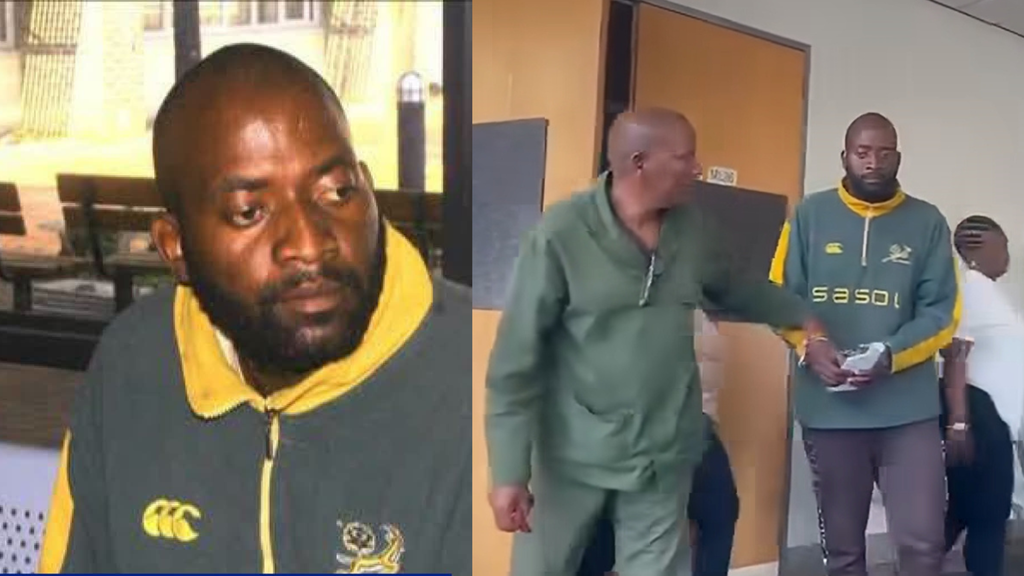
Zimbabwean man Nyasha Mugodzeri, 28, who describes himself as a spiritual healer, appeared in a Botswana court this week after authorities found him in possession of suspected human body parts including what prosecutors believe are male genitalia. Image: Supplied
A Zimbabwean man who describes himself as a spiritual healer appeared in a Botswana court this week after authorities found him in possession of suspected human body parts. The Nyasha Mugodzeri Botswana human body parts case began after members of the public tipped off authorities about the 28-year-old. Furthermore, prosecutors told the court that the suspected remains are believed to include male genitalia. As a result, Mugodzeri faces serious charges that have drawn widespread public attention across southern Africa.
Mugodzeri faces two charges. The first is unlawful possession of suspected human body parts. The second is entering Botswana through an unofficial border crossing. Furthermore, prosecutors told the court that investigations are still ongoing and that the body parts charge is currently a holding charge. As a result, the full extent of what Mugodzeri faces legally may change as the investigation develops.
Mugodzeri asked the court to release him on bail. He told the court he would not flee if granted bail. A ruling on his bail application is expected on Friday. Furthermore, the case returns to court on 18 September 2026. As a result, the next few days will determine whether Mugodzeri remains in custody while the investigation continues.
The use of human body parts in traditional healing practices is a serious and persistent problem across southern Africa. Practitioners sometimes refer to medicines made from human remains as muti. Law enforcement agencies in South Africa, Zimbabwe, Botswana and other countries have previously arrested individuals for trafficking, possessing or selling human body parts for traditional medicine purposes. The trade exploits vulnerable people and has been linked to murders specifically committed to harvest body parts. Furthermore, the involvement of unofficial border crossings in cases like this points to a broader cross-border trade in human remains that operates outside the reach of formal law enforcement. As a result, the Mugodzeri case highlights a regional problem that requires coordinated action between southern African countries.
Mugodzeri’s nationality adds a cross-border dimension to the case. He entered Botswana through an unofficial crossing, suggesting he did not use a formal port of entry. Authorities in Botswana have not confirmed where the body parts originated or whether a murder investigation runs alongside the possession charge. Furthermore, the holding charge status of the body parts count means prosecutors are still building their case. As a result, more serious charges could follow depending on what the investigation establishes about the origin of the remains.
Read more: SAPS Offers R400,000 Reward in Ekurhuleni Women Murders
Editors Note The law presumes Nyasha Mugodzeri innocent until a court proves otherwise. No court has proven any of the charges. The body parts charge is currently a holding charge and the investigation is ongoing. All information is based on available reporting published on 15 September 2026.