
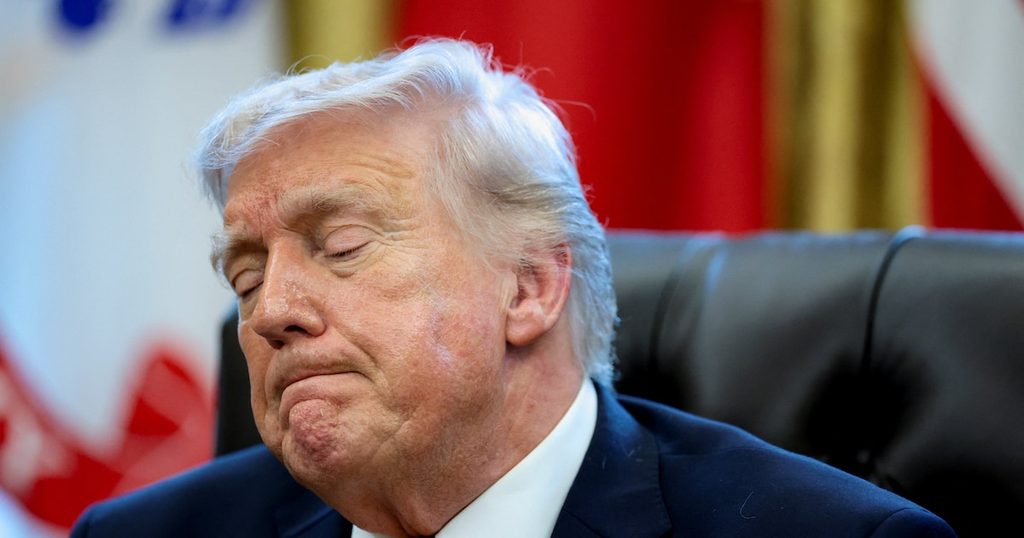
The US National Institutes of Health lifted its 18-month ban on funding research in South Africa on 18 August 2026 after NIH Director Jay Bhattacharya confirmed in an internal memo that NIH grants are exempt from President Trump’s February 2025 foreign aid freeze. Image: Reuters
The United States National Institutes of Health lifted its ban on funding research in South Africa on 18 August 2026. The NIH South Africa research funding decision came after NIH Director Jay Bhattacharya issued an internal staff memo. The memo confirmed the agency is exempt from President Donald Trump’s February 2025 executive order. Furthermore, that order had frozen foreign aid to South Africa over what Trump called egregious actions against white farmers and Israel. As a result, South African researchers who lost US funding 18 months ago can now apply for NIH grants again.
Bhattacharya explained the reasoning in his memo. NIH grants are not foreign aid. They fall under the Public Health Service Act of 1944, which fosters global scientific exchange. The Foreign Assistance Act of 1961 does not govern NIH funding. “NIH grants are distinguished from foreign aid or assistance,” Bhattacharya wrote. Furthermore, the NIH concluded it was never legally required to freeze South African research funding. As a result, it moved to restore that funding immediately.
The freeze began in February 2025 when Trump signed an executive order targeting South Africa. The order accused the South African government of taking egregious actions against white Afrikaner farmers and of hostility toward Israel. South Africa denied both claims. The government rejected the white farmer narrative and pointed to its constitution as evidence of equal protection for all citizens. Furthermore, South Africa’s International Court of Justice case against Israel added strain to relations with Washington. As a result, South Africa became one of the countries most affected by Trump’s foreign aid freeze.
The consequences for South African science were serious. NIH continued funding some ongoing research during the freeze but suspended or ended many foreign collaborations. South Africa leads Africa in HIV and AIDS research, tuberculosis, infectious disease, genomics and public health. Much of that work depends on US funding through NIH. Furthermore, South African universities lost access to grant applications and funding pipelines that took years to build. As a result, the 18-month freeze disrupted scientific work that benefits people far beyond South Africa’s borders.
Science journal obtained and published the NIH memo. It asked the Department of Health and Human Services why the exemption took 18 months to confirm. The department did not reply. That silence drew criticism from scientists who say the delay caused avoidable damage to global health research. Furthermore, NIH issued 66 percent fewer grant awards in early 2026 than in previous years. This drop links to the broader Trump administration freeze on US research funding. As a result, the South Africa decision is one positive step in a much larger and still unresolved crisis in American science funding.
Editors Note All information is based on reporting by Science journal published on 18 August 2026 and the internal NIH staff memo issued by Director Jay Bhattacharya. Mzansi Today Live will update this article as further information becomes available.