

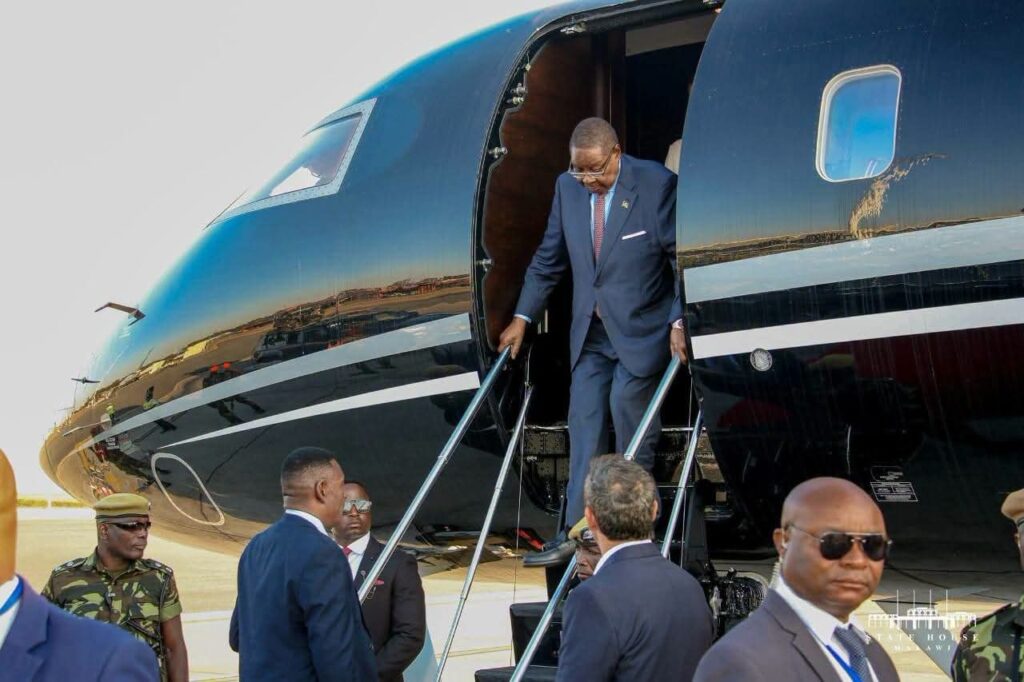
Malawian President Arthur Peter Mutharika returned home on Monday 30 June 2026 after a nearly three week private visit to South Africa, drawing criticism from Malawians who say he never visited a single site where his stranded citizens were sheltering. Image: Malawi Government
Malawian President Arthur Peter Mutharika has returned home after a private visit to South Africa that stretched nearly three weeks. The Mutharika South Africa visit return came on Monday 30 June 2026, the same day the deadline for undocumented foreign nationals to leave South Africa arrived. Furthermore, Mutharika used his return to address concerns about Malawians caught up in the immigration crisis. However, many Malawians are asking a far simpler question. Why did the president not visit a single repatriation site during his weeks in the country?
Mutharika South Africa Visit Return: What He Said
Mutharika departed Malawi on a private visit on 12 June 2026 and returned on Monday 30 June. He addressed the nation upon arrival, reassuring citizens that his administration remained actively engaged with the crisis facing Malawians in South Africa throughout his trip. He said he had been working while away, coordinating with the Chief Secretary, who heads the Department of Disaster Management Affairs, and with various ministers.
“In South Africa, I had a series of meetings with President Ramaphosa, my brother, on the problems that are happening in this country,” Mutharika said. He confirmed that the 30 June deadline does not mark the end of the matter and that he and Ramaphosa agreed to continue working together to resolve the crisis. Furthermore, he pledged to welcome and integrate returning Malawians. “I want to assure the people who have come back that each one of them we’ll take care of them and we’ll integrate them into the community,” he said.
The Question Many Malawians Are Asking
Despite Mutharika’s reassurances, the timing and nature of his visit has drawn sharp criticism. While he was in South Africa for nearly three weeks, thousands of Malawians gathered in Durban’s Sydenham suburb and at sites across KwaZulu-Natal and the Western Cape, fleeing anti-migrant threats and sleeping in cold and difficult conditions while awaiting repatriation. Furthermore, undocumented Malawian nationals relocated to a site in Musina, Limpopo, after authorities closed the Durban Drive-In repatriation site. As a result, the contrast between the president’s private visit and the conditions his citizens endured during the same weeks has not gone unnoticed.
Many Malawians have pointed out that despite confirming high-level meetings with President Ramaphosa about the crisis, Mutharika did not visit a single site where his own citizens were sheltering. Commentary reflects frustration that a five-minute stop at one of the camps, even as a symbolic gesture, would have meant a great deal to citizens who felt abandoned during one of the most frightening periods many of them have experienced in South Africa.
A Pattern of Private Visits to South Africa
This was not Mutharika’s first extended private visit to South Africa since returning to office. He previously travelled privately to South Africa in December 2025 for two weeks and again in March 2026. Furthermore, his December 2025 trip sparked speculation about his health, given his age of 85 at the time, although the government maintained the visit was personal. As a result, this is at least the third lengthy private trip Mutharika has made to South Africa within roughly six months of returning to power following Malawi’s September 2025 election.
The pattern is not unique to Mutharika. Commentators have noted that African leaders, including his predecessor and brother, former President Bingu wa Mutharika, have long travelled to South Africa for medical care while domestic healthcare systems remain under-resourced. Malawi’s founding president, Hastings Kamuzu Banda, died in a Johannesburg hospital in 1997. As a result, the question of why African leaders routinely seek private care and refuge in South Africa while their own citizens struggle within their borders is a recurring and uncomfortable one across the continent.
The Repatriation Effort Continues Regardless
Whatever the criticism of his visit, the repatriation and relief operation for Malawians in South Africa has continued with significant coordination between multiple parties. eThekwini Municipality Mayor Cyril Xaba thanked all those who contributed to the relief and repatriation effort following the relocation of undocumented Malawian nationals from the closed Durban Drive-In site to Musina. Furthermore, logistical arrangements for the onward repatriation of Malawian nationals were coordinated in partnership with the Government of Malawi, the United Nations and the International Organisation for Migration.
King Misuzulu kaZwelithini also urged the Zulu nation to embrace peace and show compassion toward foreign nationals amid the rising tensions linked to the migration crisis. As a result, while political leadership has drawn criticism, civil society, traditional leadership and humanitarian organisations have worked to support the thousands of Malawians affected.
What Happens Next
Mutharika confirmed that talks with President Ramaphosa will continue beyond 30 June to find a lasting resolution for Malawians living, working and doing business in South Africa. He acknowledged the complexity of the situation, noting that Malawians in South Africa include people who have lived there for years, married South African citizens, built businesses and owned homes. As a result, any long-term resolution will require sustained diplomatic engagement well beyond the symbolism of a single presidential visit.
Editors Note The views expressed by Malawians referenced in this article are those of members of the public and do not represent the editorial position of Mzansi Today Live. All information about President Mutharika’s visit and statements is based on official communications from the Office of the President and Cabinet and media reports published on 30 June 2026.