

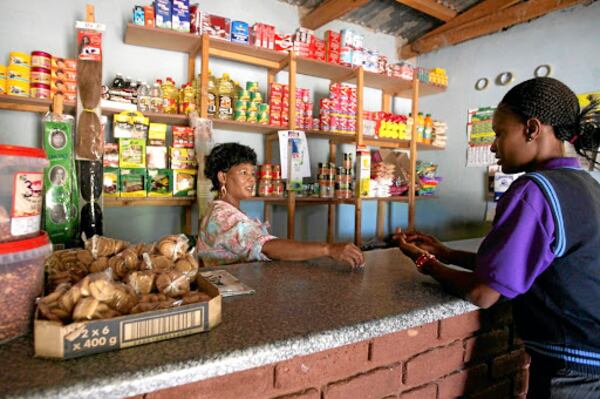
The MK Party has tabled a Private Member’s Bill in Parliament seeking to reserve spaza shop ownership exclusively for South African citizens. Photo credit: Devin Lester
The uMkhonto we Sizwe Party has tabled a Private Member’s Bill in Parliament seeking to reserve ownership of spaza shops exclusively for South African citizens. The proposal has intensified a heated national debate over township economies, immigration, public safety and the rights of foreign nationals operating in South Africa’s informal retail sector.
A Crisis in Township Business Ownership
The MK Party has described the current situation facing South African spaza shop owners as a crisis. The party argues that local traders have for years faced sustained intimidation, extortion and violence at the hands of organised criminal networks allegedly linked to the informal retail sector, forcing many to abandon businesses they had built from the ground up.
The party contends that the current regulatory environment has failed to protect South African traders and that government’s previous interventions have been insufficient. In 2025, the ANC government announced a R500 million Spaza Shop Support Fund intended to stimulate township business ownership and support local traders. The MK Party criticised that initiative at the time, describing it as political grandstanding that failed to address the root causes of the crisis. The party argued then, as it does now, that without ownership restrictions, funding alone would not solve the structural problem facing South African spaza shop operators.
What the Bill Proposes
The Private Member’s Bill seeks to legislate that ownership of spaza shops be reserved exclusively for South African citizens. Under the proposed legislation, foreign nationals would no longer be legally permitted to own or operate spaza shops within South Africa. The MK Party argues that this intervention is necessary to protect local livelihoods, curb criminality in the informal retail sector and restore order to township economies that the party says have been destabilised by the presence of foreign-owned businesses operating outside the law.
Supporters of the proposal point to what they describe as a well-documented pattern of South African traders being pushed out of the township retail space through intimidation and economic pressure. Many local shop owners have reportedly told community organisations and political parties that they have been subjected to threats and extortion, and that the absence of effective enforcement of existing laws has left them with little protection.
The Opposition
The bill has drawn significant pushback from economists, legal analysts and human rights organisations.
Economists have cautioned that foreign-owned spaza shops frequently contribute positively to local township economies, offering competitive pricing and extended trading hours that benefit consumers in communities where disposable income is limited. Restricting ownership to South African citizens, critics argue, risks disrupting established supply chains and reducing consumer choice in already economically vulnerable areas.
Legal analysts have questioned whether a citizenship-only ownership restriction would withstand constitutional scrutiny, given South Africa’s Bill of Rights protections around equality and the right to choose a trade, occupation or profession freely.
Human rights organisations have raised concerns that the bill could fuel xenophobia in communities that are already experiencing tension between local and migrant populations. These organisations have called for caution in how the legislation is framed and implemented, warning that complex socioeconomic challenges require carefully considered policy responses that do not expose vulnerable migrant communities to further harm.
The Broader Context
The MK Party’s bill arrives at a moment of heightened national sensitivity around the township spaza shop economy. Anti-illegal immigration marches have taken place in Pretoria and Johannesburg in recent days, with protesters calling on government to enforce existing immigration and labour laws more rigorously. Community organisations representing South African spaza shop owners have been calling for stronger government intervention for years, arguing that the absence of enforcement has allowed illegal operators to proliferate while law-abiding local traders are squeezed out.
The South African government has existing legislation that criminalises the employment of undocumented foreign nationals and places obligations on business owners to comply with licensing and food safety regulations. Enforcement of those laws has been widely criticised as inconsistent and inadequate.
What Happens Next
The Private Member’s Bill will now follow the standard parliamentary process, which includes a period for public comment, scrutiny by the relevant portfolio committee and debate in the National Assembly before any vote can take place. Private Member’s Bills face a high bar in South Africa’s Parliament and the bill’s passage into law is not guaranteed given the significant opposition it has already attracted from multiple quarters.
Editors Note All information in this article is based on publicly available parliamentary records, party statements and media reports at the time of publication.