

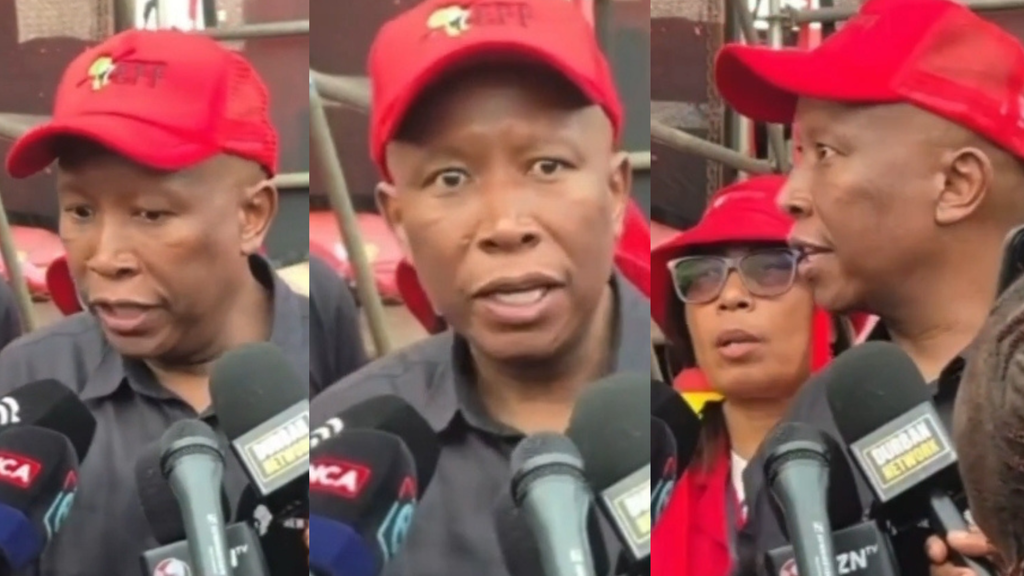
EFF leader Julius Malema called on South Africa to document undocumented immigrants as the country grapples with a spate of women’s killings in Ekurhuleni. Image: Supplied
EFF leader Julius Malema has called on South Africa to document all undocumented immigrants as the nation grapples with the killings of nine women in Ekurhuleni. Malema described the murders as a war declared against women. He also argued that documentation would give authorities the tools to trace and hold crime suspects accountable.
“The solution is, let’s document these people because whether you like it or not, they’re here,” Malema said. He clarified that the EFF’s open border policy does not mean the party welcomes undocumented people. Instead, he said, formalising their presence through documentation makes them traceable and accountable to the law.
In addition, Malema argued that deportation is an ineffective and expensive response to undocumented immigration. He said foreigners often fill labour gaps in sectors that South Africans avoid. “Whether you like it or not, there are no borders in South Africa,” he said. In his view, the country’s porous borders make mass deportation unrealistic.
Meanwhile, the backdrop to Malema’s call is deeply disturbing. Nine women have turned up dead across Ekurhuleni since July 2026. Authorities found their bodies in Kempton Park, Olifantsfontein, Clayville, and KwaThema. Most were partially clothed or naked, with visible signs of trauma. The victims range in age from their late twenties to their late thirties. Investigators have formally identified only two of them.
One of the identified victims is Elizabeth “Tsontso” Moselakgomo, 38, a runner from Kempton Park. She left home for an afternoon jog on 10 September 2026 and never returned. As a result, her eight-year-old daughter Khumo raised the alarm when her mother did not come home. The community laid Elizabeth to rest in Mpumalanga on Sunday 20 September 2026.
In response, police assembled a multidisciplinary task force to investigate the cases. Acting Police Minister Firoz Cachalia cautioned against premature conclusions about links between the deaths. Furthermore, authorities are offering a R400,000 reward for information leading to an arrest. Police have arrested one suspect in connection with the first victim’s death.
As a result of the killings, public outrage grew rapidly. The March and March movement staged a protest in Kempton Park. They demanded justice for the victims and called for stronger protections for women. However, organiser Sandile Dube was careful to state that the group did not allege a foreign national committed the killings. “There is no place in society for hate and killing of women,” Dube said.
Moreover, anti-immigration activist Ngizwe Mchunu attacked Malema directly, blaming his stance on undocumented foreigners for creating conditions that allowed crime to flourish. Some South Africans sided with Mchunu, while others rejected his comments as a personal attack on Malema rather than a response to the crisis.
Ultimately, South Africa has one of the highest rates of violence against women in the world. The Ekurhuleni killings have intensified that debate and forced the country to reckon with failures in border control, policing, and the protection of women in communities across Gauteng.
Read also: Ninth Woman’s Body Found in Dawn Park as Ekurhuleni Murder Crisis Deepens and Two Victims Identified