

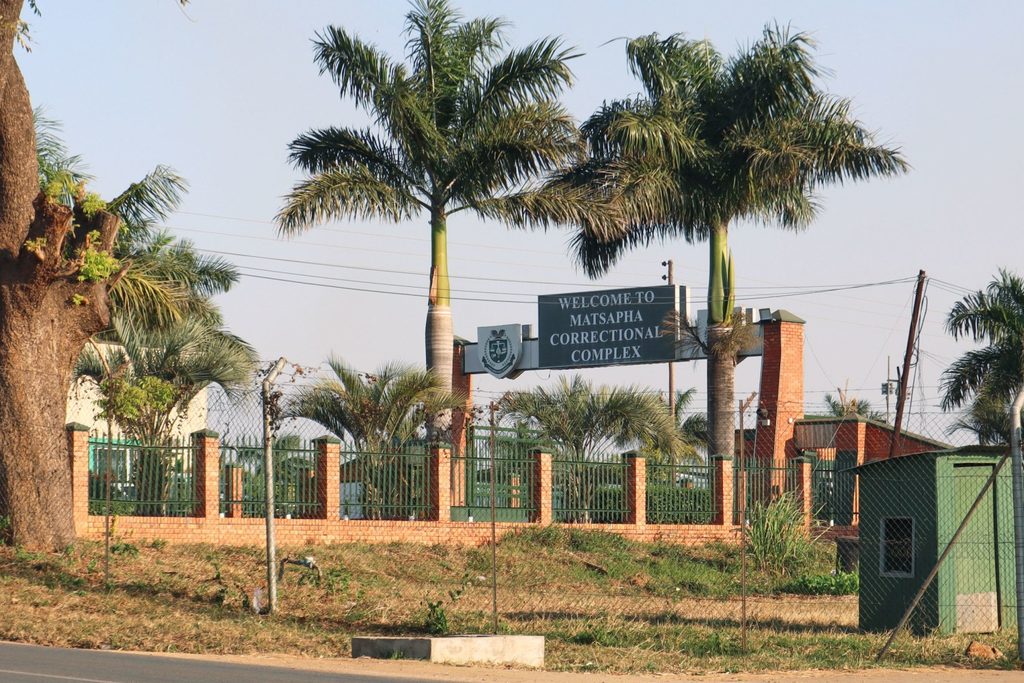
Phone Chomsavanh spent more than 14 months at the Matsapha Correctional Complex in Eswatini before his release on 4 October 2026. Image supplied
Eswatini stands accused of quietly releasing US deportees into South Africa through informal border crossings at night. Swaziland News made the claim on Wednesday, 7 October 2026. According to the outlet, Eswatini US deportees held under a deal with the Trump administration have crossed into South Africa after dark.
At the time of publishing, neither the Eswatini government nor South African authorities had publicly responded to the claim.
The report comes just days after one of the deportees walked free. Phone Chomsavanh, a Laotian national, left the Matsapha Correctional Complex on Sunday, 4 October 2026. He had spent more than 14 months in the maximum security prison.
His US based lawyer, Tin Thanh Nguyen, confirmed the release. According to Nguyen, Chomsavanh then travelled through Johannesburg on his way back to Laos. Nguyen also said his client only learnt of his deportation to Eswatini shortly before the military cargo plane landed there in July 2025.
Chomsavanh has no ties to Eswatini. His parents fled Laos, and he was born in a refugee camp in Thailand. His family later moved to the United States when he was seven years old. Meanwhile, an Eswatini government spokesperson did not immediately acknowledge his release.
How the Eswatini US deportees deal works
Eswatini signed a memorandum of understanding with Washington on 14 May 2025. Under the deal, the US agreed to pay the kingdom 5.1 million US dollars, roughly R100 million. In return, Eswatini agreed to host up to 160 third country nationals with final deportation orders.
Officially, the money goes toward building Eswatini’s border and migration management capacity. So far, the kingdom has taken in around 30 deportees. The first group of five arrived in July 2025 from Vietnam, Jamaica, Laos, Cuba and Yemen. At the time, US officials said the men had convictions for serious crimes, including murder and child rape.
However, Eswatini insists the deportees stay in the country only for a short time. The government says it plans to return them to their countries of origin. Some have already gone home through voluntary repatriation.
South Africa raised concerns about the Eswatini US deportees from the start. When the first group arrived, South African officials feared the men could slip across the porous border between the two countries. South Africa had also turned down a US request to accept third country deportees. In response, Eswatini said the men posed no threat to the kingdom or its neighbours.
In addition, civil society groups in Eswatini have taken the deal to court. They argue the kingdom cannot legally hold foreign nationals in prison without charge. Nguyen has also accused Eswatini of blocking lawyers from reaching the deportees.
Around a dozen African countries have accepted third country deportees from the US. Last week, the US Supreme Court temporarily allowed the Trump administration to keep removing immigrants to third countries. The court will hear full arguments in the case in December.
Commentary across social media platforms has been sharp. Some users described Eswatini as a security risk to South Africa. Others questioned the role of crime intelligence, while many said they expected this outcome from the start. A number of users also criticised South African leaders for failing to take a firm stance against Eswatini.