

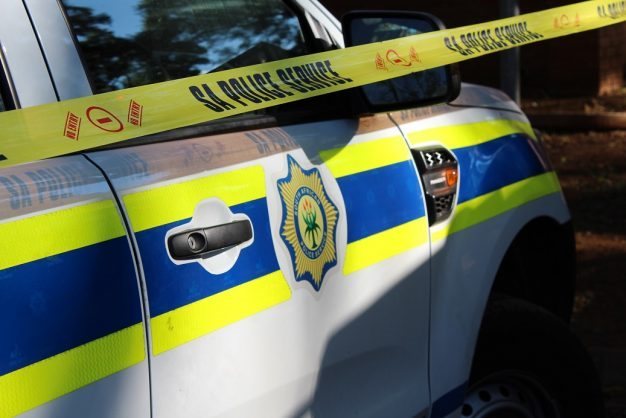
South African police arrested a 43-year-old foreign national in Bloemfontein on Monday 7 September 2026 after catching him altering a South African identity document at an internet café during Operation Shanela 2. Image: SAPS/Supplied
A 43-year-old foreign national is in custody after police caught him altering a South African identity document at an internet café in Bloemfontein on Monday 7 September 2026. The Bloemfontein identity document fraud arrest happened during Operation Shanela 2. Furthermore, officers found the man in the act of altering the document during the sweep. As a result, the suspect faces charges of identity document fraud.
Operation Shanela 2 is a nationwide SAPS operation targeting serious and priority crimes. It covers all nine provinces through visible policing, roadblocks, searches and swoops on crime hotspots. The operation targets drug trafficking, illegal firearms, gender-based violence and document fraud. Identity document fraud has become one of the most targeted crime types given its links to criminal networks and illegal immigration. Furthermore, the operation produced thousands of arrests since its launch. As a result, Monday’s Bloemfontein arrest shows the operation finding results in the Free State alongside larger urban centres.
Identity document fraud is a serious and growing problem in South Africa. Fraudulently altered documents allow foreign nationals to access services, employment, banking and social grants. They also give criminals false identities to commit other crimes. Furthermore, altered documents can allow people to open bank accounts, register businesses and obtain credit in someone else’s name. As a result, a single fraudulently altered document can spread harm across multiple systems and affect innocent people for years.
The Department of Home Affairs has been working to replace green barcoded ID books with Smart ID cards. The green ID book is South Africa’s most vulnerable identity document. Photographs can be removed and replaced in it. Artificial intelligence is also creating new opportunities for document fraud. Furthermore, approximately 16 million green barcoded ID books remain in circulation. As a result, identity document fraud will persist until the Smart ID replacement programme reaches all remaining holders.
Internet cafés and printing businesses are well-known locations for document fraud. They provide computers, printers, laminating equipment and software used to manipulate identity documents. Police previously busted document fraud operations at such establishments in Johannesburg, Cape Town and other cities. Criminals target these venues because they offer the tools needed for forgery without the cost of a dedicated facility. Furthermore, paying for internet café time leaves less of a trace than operating from a fixed address. As a result, police now include internet cafés in Operation Shanela sweeps because experience shows criminals use them.
The Bloemfontein arrest follows a pattern of document fraud cases across South Africa in 2026. SAPS busted a visa corruption scheme inside the Department of Home Affairs in August 2026 involving more than 2,000 fraudulent study visas and R181 million in corrupt payments. That investigation showed document fraud operating not only at street level but deep inside government systems. Furthermore, the SIU found corrupt Home Affairs officials selling identity documents and visas to foreign nationals. As a result, identity fraud in South Africa operates at multiple levels from individual forgers at internet cafés to organised networks inside government departments.
Also read: SIU Exposes R181 Million Visa Corruption Scheme Inside Home Affairs as Over 2000 Study Visas Cancelled.