
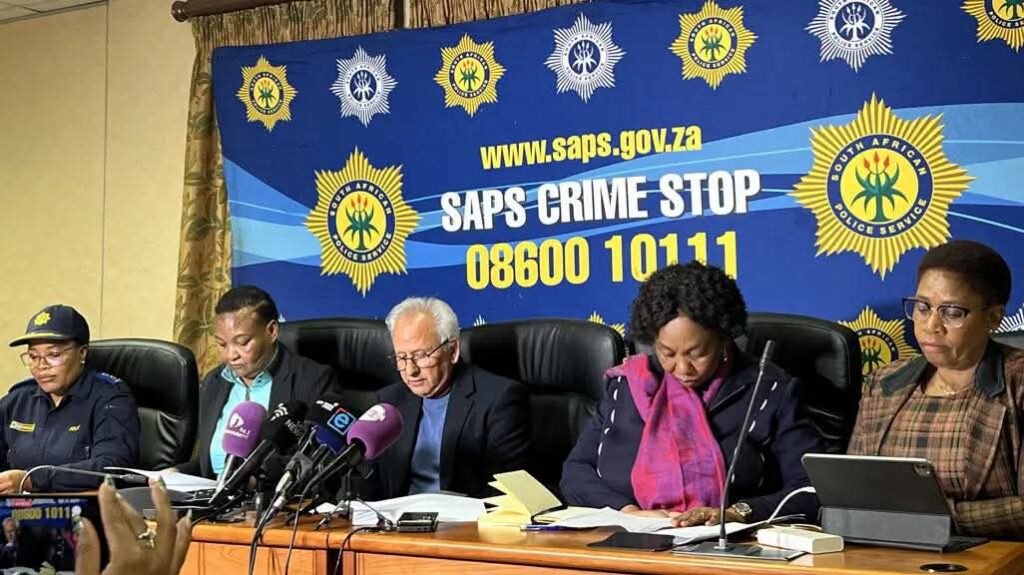
Acting Police Minister Firoz Cachalia confirmed on Monday 22 June 2026 that South Africa is spending more than R600 million on a nationwide security operation ahead of the 30 June anti-immigration protests. Image: Gallo Images
South Africa is spending more than R600 million on a nationwide security operation ahead of the 30 June anti-immigration protests. The 30 June protest R600 million cost was confirmed by Acting Police Minister Firoz Cachalia on Monday 22 June 2026. Furthermore, SAPS has activated joint operations across all nine provinces and placed the SANDF on standby. As a result, South Africa is pouring more than half a billion rands into preventing the kind of unrest that has not been seen since the July 2021 riots.
30 June Protest R600 Million: What Cachalia Said
Cachalia was blunt about the financial cost of the operation. “That’s what it costs when there are efforts to destabilise the country,” he said at a press conference in Johannesburg on Monday. Furthermore, he confirmed that no SAPS member would be permitted to take leave on 30 June. Police across all nine provinces are on full operational alert. As a result, the security deployment around the 30 June deadline is the largest single protest-related policing operation South Africa has seen in years.
Cachalia issued a clear warning to those planning to march. “Our message is clear. Everyone has the constitutional right to protest peacefully and within the confines of the law. However, criminality, intimidation, violence, the destruction of property and any attempt to undermine public safety will not be tolerated,” he said. Furthermore, he warned that no one may arrive at a protest carrying any instrument that could serve as a weapon. As a result, organisers must submit their plans in advance and confirm their marshal count and messaging to supporters.
The SANDF Is on Standby
Defence Minister Angie Motshekga confirmed that the South African National Defence Force remains on standby. However, she stressed that the SANDF has a limited and restricted role in public order policing. The military will only deploy if police formally request additional support. Furthermore, President Cyril Ramaphosa must grant permission before the SANDF can be deployed. Motshekga said lessons from the 2021 riots made it necessary to keep the military ready as a contingency. “In case things get out of hand, police will invite us to assist,” she said.
What the R600 Million Means for South Africa
The R600 million price tag has drawn sharp reactions. Critics argue that the money represents resources that would otherwise improve safety in communities and police stations. Cachalia acknowledged this point directly. “Money that would otherwise have been deployed, perhaps to improve safety in communities and police stations, now has to be spent on ensuring that we have the resources to deal with this protest action,” he said.
Twenty-seven civil organisations including the March and March Movement held a media briefing on Wednesday 24 June 2026. They expressed frustration at the R600 million figure. “The government has issued a statement saying it is going to spend R600 million as a result of the 30th. It has ensured that no police officer takes leave on the 30th, but not once have they tried to engage with us. That’s what this government does. It plans for the citizens and against the citizens, but never consults the very same citizens,” a spokesperson for the organisations said. Furthermore, the organisations denied any intention to cause violence. “No one will be violated. No one will be killed on the 30th of June and no looting will take place in our name,” they said.
Why the Government Is Taking No Chances
The government’s concern is rooted in the July 2021 riots. That unrest, triggered by the imprisonment of former President Jacob Zuma, spiralled into days of looting and violence across KwaZulu-Natal and Gauteng. More than 350 people died. Shopping centres burned. Supply chains collapsed. The South African Human Rights Commission estimated the economic damage at approximately R50 billion. Furthermore, roughly two million jobs were lost or disrupted. As a result, the government has made clear it will not allow a repeat of those events on or after 30 June 2026.
KwaZulu-Natal, Gauteng, the Eastern Cape and the Western Cape have all been identified as potential hotspots. All nine provincial premiers are coordinating emergency planning with SAPS leadership ahead of 30 June. Furthermore, intelligence teams are closely monitoring social media and potential flashpoints. As a result, the security apparatus being deployed on 30 June is comprehensive, coordinated and expensive.
The 30 June Deadline
The March and March Movement and allied organisations set 30 June 2026 as a deadline for undocumented foreign nationals to leave South Africa. The movement has threatened nationwide shutdown action if the deadline is not met. However, President Ramaphosa has stated clearly that the deadline carries no legal authority. The government will not act in response to it. Furthermore, labour federations Cosatu, Fedusa, Saftu and Nactu confirmed that the 30 June protest was not called by any recognised labour federation and therefore carries none of the legal protections of a formal strike. As a result, workers who participate in any work stoppage on 30 June do so at their own legal and financial risk.
For more information on SAPS’s operational readiness visit saps website. Read our earlier coverage: Ramaphosa Addresses the Nation on Immigration.
Editors Note All information in this article is based on Acting Police Minister Firoz Cachalia’s press conference on 22 June 2026 and the media briefing by 27 civil organisations on 24 June 2026. The views of the March and March Movement and allied organisations are those of those organisations and do not represent the editorial position of Mzansi Today Live. Mzansi Today Live will update this article as further information becomes available.