

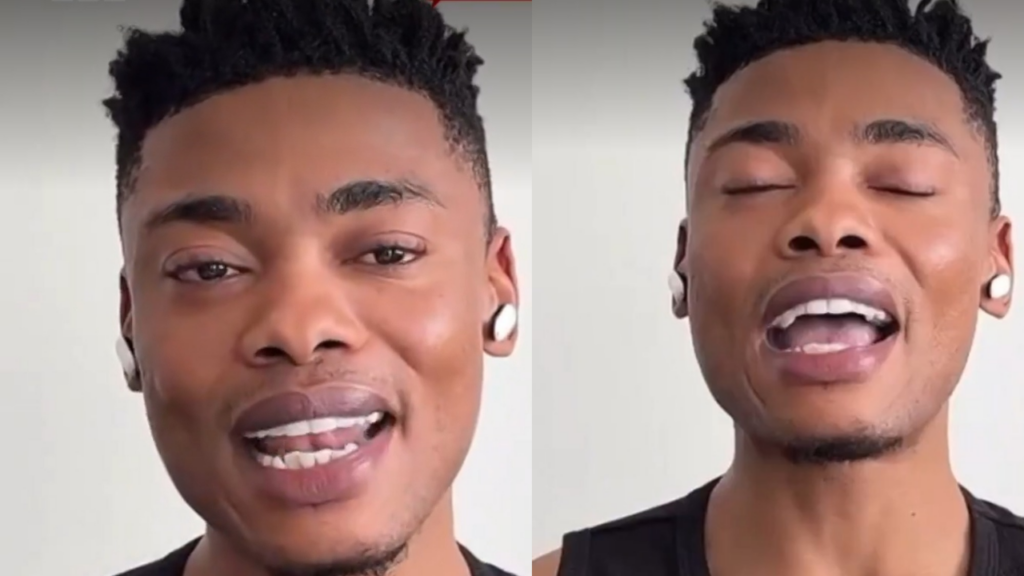
South African influencer Masheane Sefuthi, known online as Mashie, has faced significant backlash after appearing on the BBC’s Focus on Africa programme to discuss his years of skin lightening using hydrogen peroxide mixed with lotion Image: @admin
Software developer and influencer Masheane Sefuthi, known online as Mashie, has appeared on the BBC’s Focus on Africa programme to discuss his years of skin lightening using hydrogen peroxide mixed with lotion. The feature has drawn significant backlash from South Africans who argue he is promoting a dangerous practice and needs professional help rather than a media platform.
South African software developer and social media influencer Masheane Sefuthi, who goes by the name Mashie online, has become the subject of significant public debate after appearing on the BBC’s Focus on Africa programme to discuss his years of skin lightening. Sefuthi, who has a growing following across YouTube and TikTok, detailed how his use of skin lightening products began during his high school years following bullying, and escalated into a practice driven by the compliments and attention lighter skin brought him. The BBC feature has prompted strong reactions from South Africans online who argue that giving him a platform normalises a dangerous and psychologically harmful practice.
What Mashie Said on the BBC
In the Focus on Africa segment, Sefuthi spoke candidly about the origins of his skin lightening journey, tracing it back to bullying he experienced during his high school years. He described how the positive attention and compliments he received as his skin lightened reinforced the behaviour and kept him returning to the practice.
Sefuthi’s skin lightening method first drew widespread attention in South Africa in early 2025 when he shared it on social media. In that video he described mixing 40% volume hydrogen peroxide with his regular skin lotion and adding glycerin for moisture, and demonstrated the application on camera. He insisted at the time that he had not bleached his skin but rather whitened it, a semantic distinction that was widely rejected by commentators and health professionals.
Hydrogen peroxide, commonly used as a disinfectant and teeth whitening agent, lightens skin by causing capillary embolism a process in which blood flow to the capillaries is disrupted, causing the skin to appear temporarily whiter. The Centers for Disease Control in the United States warns that hydrogen peroxide at high concentrations is corrosive to skin, eyes and mucous membranes and can cause serious burns and blisters. Health experts have repeatedly cautioned that using concentrated hydrogen peroxide on skin poses serious long-term risks including chemical burns, permanent discolouration and inflammatory skin disorders.
The Backlash
The BBC feature has not been received warmly by South Africans online. Commentary across social media reflects several distinct strands of criticism directed at both Sefuthi and the BBC for platforming the story in the manner it did.
A significant portion of online commentary has pointed out that Sefuthi does not appear particularly dark-skinned to begin with, with many social media users questioning why someone of his complexion would feel the need to lighten their skin at all. Others have argued that this observation itself illustrates the insidious nature of colourism — the internalised prejudice against darker skin tones that drives people across the spectrum of melanin to seek lighter appearances regardless of their actual complexion.
Many South Africans have argued that Sefuthi needs professional mental health support rather than a BBC platform. The consensus among a large portion of online commentators is that his experience — rooted in childhood bullying, a desire for validation through physical appearance and a willingness to use dangerous chemicals on his body in pursuit of that validation — reflects deep psychological wounds that therapy, not media exposure, is equipped to address.
A smaller but vocal group has expressed concern that the BBC feature, regardless of its editorial intent, effectively functions as an advertisement for skin bleaching by detailing Sefuthi’s method and allowing him to describe the positive social outcomes he attributes to his lighter skin. Critics argue that showing a young, attractive, visibly successful influencer discussing his skin lightening practice in a mainstream international media context normalises and potentially encourages the behaviour among vulnerable young people who may be experiencing similar pressures.
This Is Not His First Controversy: The Fat Shaming Allegations
South Africans drawing attention to the BBC feature have also been quick to point out that the skin bleaching story is not Sefuthi’s first brush with controversy over body image. In September 2025, Sefuthi was accused of fat shaming and faced public criticism after comments he made on the subject drew widespread condemnation. The controversy was significant enough to be addressed on The Gareth Cliff Show, where Sefuthi appeared to face questions about the fat shaming accusations described by the show as him being accused of fat shaming “again”, suggesting a pattern of similar incidents.
Commentary across social media reflects the view that a pattern is emerging, an influencer who has publicly fat shamed others is now receiving a BBC platform to discuss his own body image struggles rooted in bullying. South Africans online have noted the apparent contradiction, with many arguing that the same empathy Sefuthi is now seeking for his own experience is empathy he allegedly denied to others when commenting on their bodies and weight.
The combination of the fat shaming allegations and the skin bleaching BBC feature has led to a broader public conversation about the accountability of social media influencers particularly those who position themselves as relatable and aspirational while allegedly contributing to the very culture of body shaming that they later claim to have suffered under.
Colourism and the Deeper Issue
The conversation around Mashie sits within a much larger and more painful national and continental conversation about colourism, the preference for lighter skin tones that is deeply embedded in post-colonial societies across Africa, South Asia and the African diaspora. The World Health Organisation has recognised skin bleaching as a public health crisis on the African continent. In Congo-Brazzaville and Nigeria, between 60 and 77 percent of women reportedly use skin lightening products. In South Africa, the practice has been documented across genders and generations.
South African media personalities including Khanyi Mbau have spoken openly about their own skin lightening journeys, normalising the conversation while simultaneously drawing criticism from those who argue that public figures have a responsibility not to promote practices that are both medically dangerous and psychologically destructive. The debate around Mbau mirrors many of the arguments now being directed at Sefuthi, the tension between personal autonomy and the social responsibility that comes with a public platform.
Mental health professionals have consistently argued that skin bleaching rooted in experiences of bullying, colourism and the pursuit of social acceptance is a symptom of deeper psychological distress that requires professional intervention. The desire to fundamentally alter one’s physical appearance in response to external social pressure particularly when that pressure began in childhood is recognised in clinical literature as a potential indicator of body dysmorphia and internalised racial self-hatred, both of which are treatable conditions that respond well to evidence-based therapeutic approaches.
Sefuthi Has Not Responded to the Latest Backlash
Masheane Sefuthi had not issued a public response to the backlash generated by the BBC feature at the time of publication. When his skin lightening method first went viral in early 2025, he pushed back against criticism by insisting that he had not bleached his skin and that his method was informational rather than promotional. Whether he will address the renewed attention generated by his BBC appearance remains to be seen.
Editors Note The views expressed by members of the public regarding Masheane Sefuthi’s BBC appearance are those of South Africans online and do not represent the editorial position of Mzansi Today Live. This article does not constitute medical advice. Anyone experiencing distress related to body image or skin colour is encouraged to seek support from a qualified mental health professional.